Sniffing...
Anglo-Scottish Border
Border Collie
Herding GroupHighly IntelligentEnergeticAthleticLoyalMedium Size12-15 years
The Border Collie stands as a testament to canine intelligence and athleticism, originating from the Anglo-Scottish border as a premier herding dog. Renowned for their unparalleled cognitive abilities and boundless energy, they are increasingly sought after as companion animals, though their demanding nature necessitates committed and informed ownership. This report provides a comprehensive examination of the Border Collie, delving into its rich history, distinctive physical characteristics, complex temperament, rigorous exercise and mental stimulation requirements, crucial training and socialization protocols, prevalent health considerations, suitability within various living environments, and remarkable versatility across a multitude of working roles and canine sports. It aims to offer deep insights for prospective owners, breeders, and canine professionals alike.
Important Disclaimer:The information provided on this page about the Border Collie is intended for general knowledge and informational purposes only and does not constitute professional veterinary advice. Always consult with a qualified veterinarian for any health concerns or medical conditions related to your dog. The breed identification provided by our AI tool is a prediction and should not be considered a definitive diagnosis.
Border Collie Dog Breed Overview
- Breed Group
- Herding
- Origin
- Anglo-Scottish border region, British Isles
- Purpose
- Herding livestock (primarily sheep), Canine sports, Companion
- Size
- Medium
- Lifespan
- 12-15 years
- Temperament
- Highly IntelligentEnergeticLoyalAffectionateEager to pleaseAlertResponsiveSensitiveWork-oriented
- Activity Level
- Very High
- Trainability
- Very High (Exceptionally responsive to training)
- Grooming
- Moderate
- Shedding
- Moderate (Heavier seasonally)
- Barking
- Moderate to High (Can be vocal)
- Good with
- Health Issues
- Hip DysplasiaCollie Eye Anomaly (CEA)Progressive Retinal Atrophy (PRA)EpilepsyOsteochondritis Dissecans (OCD)Trapped Neutrophil Syndrome (TNS)Border Collie Collapse (BCC)Neurological IssuesDental ProblemsObsessive-Compulsive Behaviors (if under-stimulated)
- Suited For
- Experienced dog owners
- Highly active individuals or families
- Homes with ample space or access to areas for exercise
- Owners committed to consistent training and extensive mental stimulation
- Those interested in canine sports (agility, herding, etc.)
- Active families, Children (with supervision and training), Other dogs (with early socialization)
Do you know Border Collie is among the smartest dog breeds?Read more about other smart dog breeds →
Border Collie History & Origin: Popularity of Border Collies
The Border Collie stands as a testament to canine intelligence and athleticism, originating from the Anglo-Scottish border as a premier herding dog. Renowned for their unparalleled cognitive abilities and boundless energy, they are increasingly sought after as companion animals, though their demanding nature necessitates committed and informed ownership.

🐶 Border Collie puppy exploring
History of Border Collie
The Border Collie's origins are firmly rooted in the Anglo-Scottish border region, descending from traditional landrace collies. Its development was driven by the practical needs of shepherds for herding livestock, particularly sheep, in challenging terrains. The breed's traits were honed for working ability, not aesthetics.
A tricolour dog named Old Hemp, born in 1893, is considered a foundational sire of the modern Border Collie. His quiet, powerful working style became the breed standard. He reportedly sired around 200 pups.
In 1915, James Reid, Secretary of the International Sheep Dog Society (ISDS), coined the term 'border collie' to distinguish these working dogs from Kennel Club Collies, which emphasized appearance. This marked a significant divergence in breeding philosophies.
Registries like the ISDS in the UK and the American Border Collie Association (ABCA) in the US prioritize working ability, while Kennel Clubs (like the AKC, which recognized the breed in 1995) also include conformation standards, leading to ongoing debate within the breed community.
Purpose and Popularity of Border Collie
The primary and historical purpose of the Border Collie is herding sheep, utilizing a characteristic intense gaze known as 'the eye'. Their intelligence and trainability also make them excel in various canine sports like agility, obedience, and flyball.
While increasingly popular as companion animals, their demanding nature requires committed owners. The ABCA registers significantly more Border Collies annually (approx. 20,000) compared to the AKC, indicating a strong continued emphasis on their working heritage within the community.
Beyond herding and sports, they serve in roles like search and rescue, therapy work, and as service dogs due to their intelligence and adaptability.
Did you know?
A single Border Collie named Old Hemp, born in 1893, is considered the foundational father of the breed, with most modern Border Collies tracing their lineage back to him.
Border Collie Dog Breed Size and Physical Traits
Size of Border Collie dog Breeds
Size Category
Medium
Height
Male
19-22 inches (48-56 cm)
Female
18-21 inches (46-53 cm)
Weight
Male
30-55 lbs (14-25 kg)
Female
30-55 lbs (12-19 kg)
Appearance of Border Collie dog Breeds
- Coat Type
- Border Collie has a double coat; either rough (medium-length, may be wavy) or smooth (short-haired). Their coat is mostly weather-resistant.
- Eye Size & Color
- The eyes of Border Collies are moderately sized ovals, giving an intensive, expressive gaze. They are usually brown, but can be blue (one or both), especially in merles.
- Ear Size & Shape
- The ears of Border Collies are medium in size, pointed, can be erect, semi-erect, or tipped. They are often alert and twitchy, very expressive.
- Tail
- The tail of Border Collies is typically hangs low, is long (reaching the hock), and may curve slightly at the end. It stands proudly when excited or happy.
Description of Border Collies Appearance
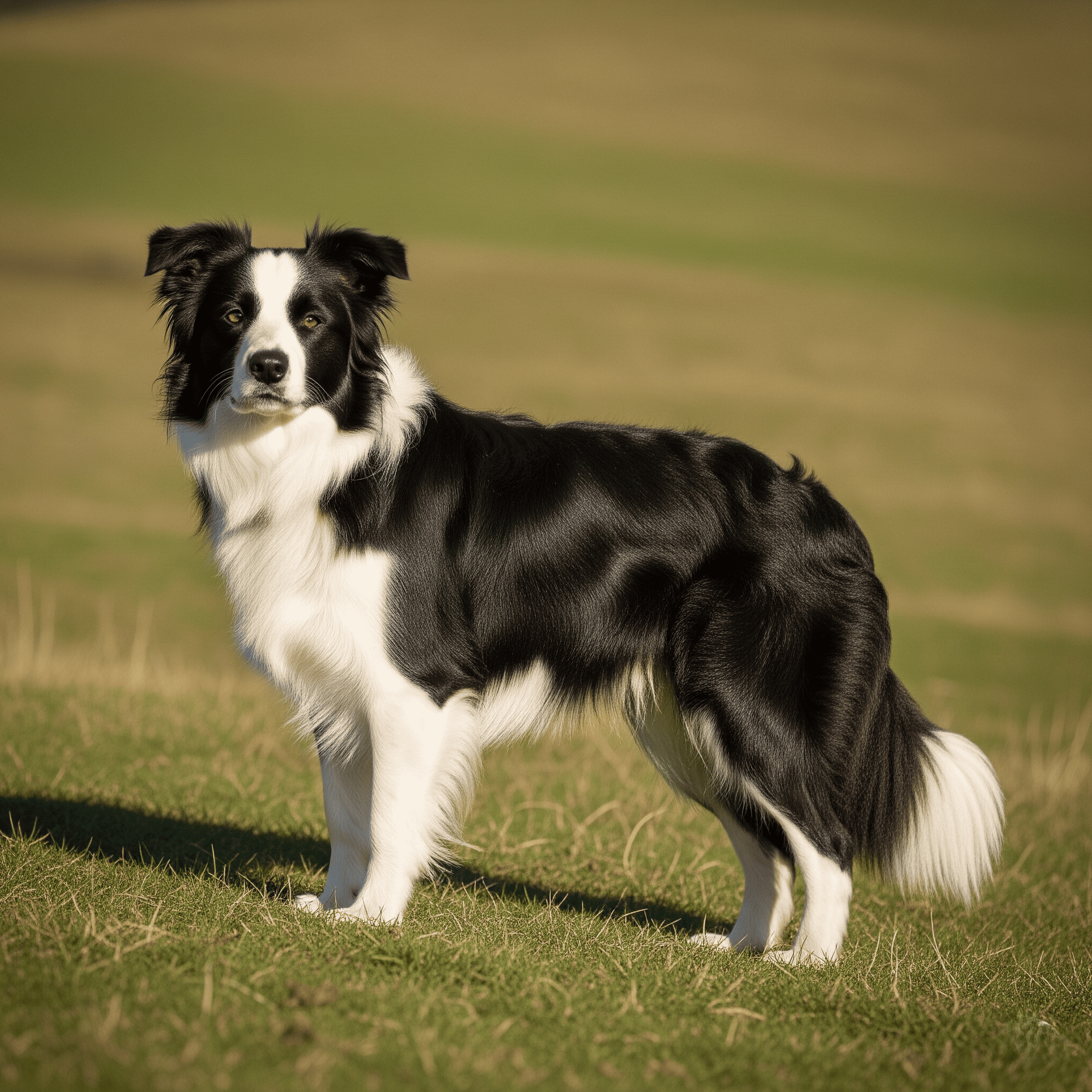
👀 How does Border Collie look like?
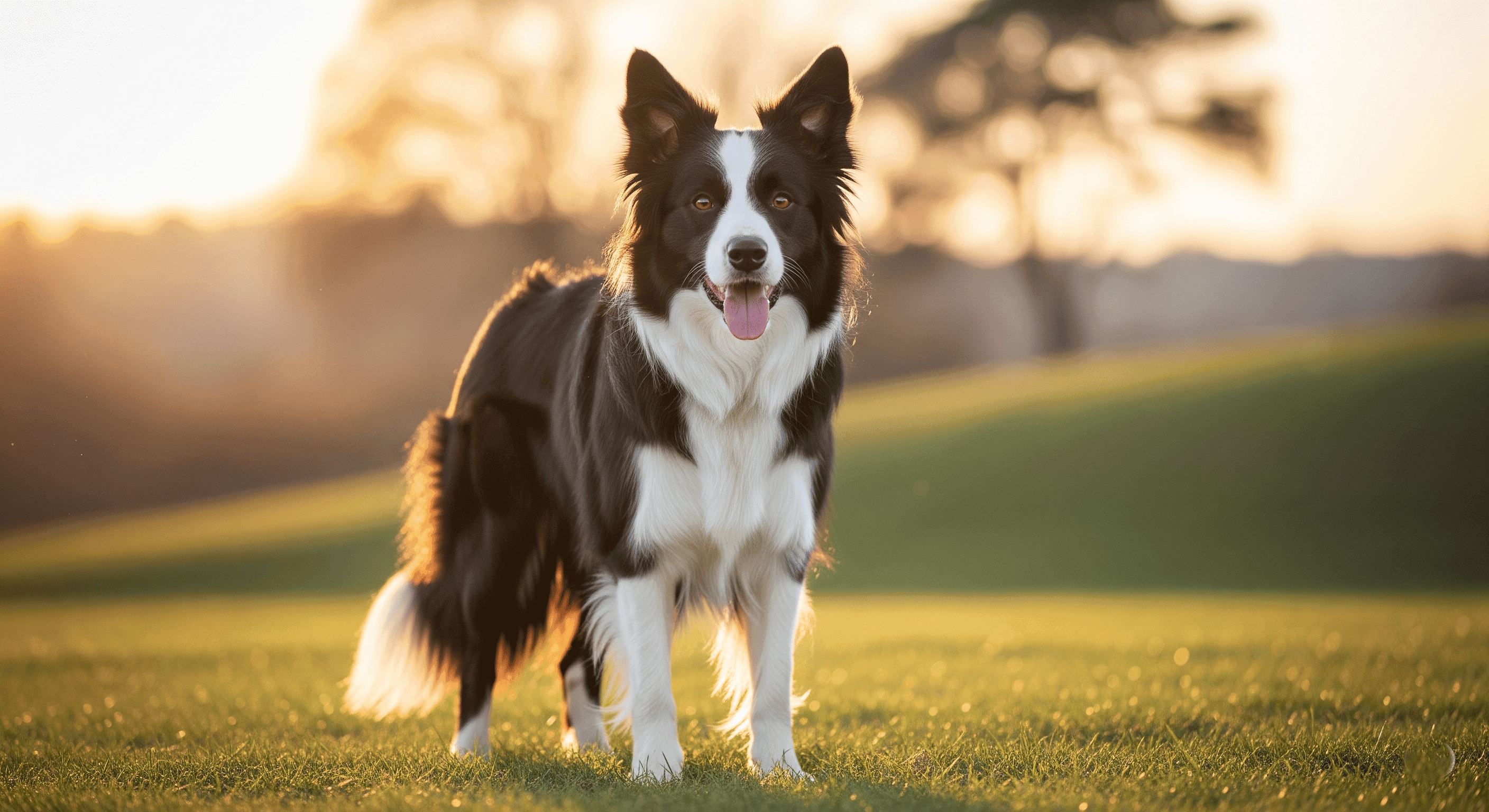
- The Border Collie is a medium-sized, athletic dog built for endurance and agility, reflecting its herding heritage. They typically stand 18-22 inches tall and weigh between 30-55 pounds.
- Their most notable features include an intense, intelligent gaze ('the eye'), expressive and alert ears, and a weather-resistant double coat that comes in two types: rough (medium-length) and smooth (short).
- Border Collies exhibit an exceptionally wide range of coat colors and patterns, including the well-known black and white, as well as blue merle, red merle, tricolour, sable, and many others.
- Their tail is typically long and carried low when focused, but can rise when excited.
Coat Colors of Border Collie dogs
Black & White
Blue Merle
Red & White
Tri-colour (Black, White, Tan)
Wide Variety (Sable, Lilac, Gold, etc.)
Distinctive Features of Border Collie dog breeds
- Border Collies are athletic, agile, and well-balanced, exuding strength and endurance.
- They have an intense, intelligent 'herding eye' used to control livestock.
- They have a remarkable variety in coat colors and patterns.
- Their expressive ears are highly attuned to sound.
- Their weather-resistant double coat is suitable for outdoor work.
Border Collie Environment, Barking, Trainability and More...
Barking Level of Border Collie
Moderate to High
Border Collies can be quite vocal and are not afraid to bark, whether to alert, express excitement, or out of boredom if not adequately stimulated or trained. Early training can help manage excessive barking.
Trainability of Border Collie
Very High
Consistently ranked as the most intelligent dog breed, Border Collies are exceptionally quick learners and highly responsive to training. They excel with positive reinforcement methods and enjoy the challenge of learning new commands and tricks.
Energy Level of Border Collie
Very High
Border Collies possess incredibly high energy levels and a strong work ethic. They are always ready for action and require significant daily exercise (1-2 hours for adults) and mental tasks to prevent boredom and destructive behaviors.
Friendly Environment Description of Border Collies
- Border Collies thrive in active households where they receive ample physical exercise and mental stimulation. They are best suited to homes with space, ideally a securely fenced yard, but more importantly, owners who will engage with them in activities.
- They are adaptable to various climates due to their double coat but require protection from extreme heat and cold.
- These dogs need to be part of the family and can become destructive or develop behavioral issues if left alone for long periods or if their needs are not met.
- Early and ongoing socialization is crucial to ensure they are well-adjusted to various people, sounds, and situations, especially given their sensitivity and herding instincts.
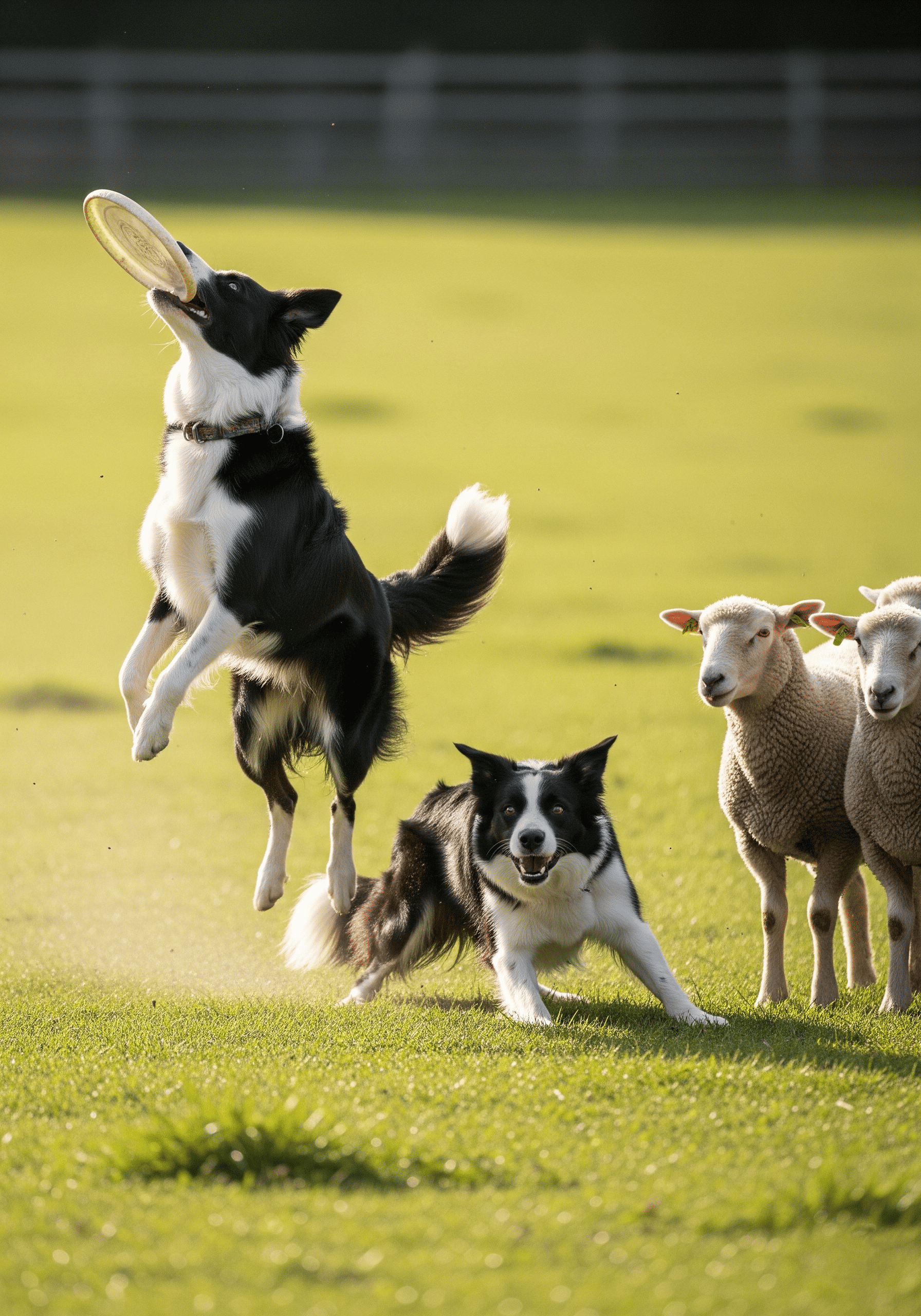
🏠 Border Collie dog playing with a frisbee with their group
Personality Traits of Border Collie dog breed
Exceptionally IntelligentHigh EnergyLoyal & DevotedAffectionate with familyEager to PleaseWork-Oriented & DrivenSensitive (to sound and environment)Alert & WatchfulProblem-Solver
Nature
Border Collies are a dynamic blend of intense intelligence, boundless energy, and a profound work ethic. They are deeply loyal and affectionate to their families, but require significant engagement.
Affectionate
They form strong bonds with their families and thrive on human interaction, companionship, and attention. They are known for their affectionate nature and loyalty.
With Children
They can be excellent family companions and gentle with children if properly socialized and supervised. Their herding instinct may lead them to nip or chase children, so this behavior must be channeled appropriately through training.
With Other Dogs
They are generally sociable and can get along well with other dogs, especially if socialized from puppyhood. However, they can sometimes display territorial behavior or attempt to 'herd' other dogs.
With Strangers
They can be reserved or wary of strangers, a trait stemming from their protective instincts. Early and positive socialization is crucial to help them become more comfortable.
Protective
Alert and watchful, they can be protective of their family and territory, often barking to announce visitors or unusual occurrences.
Adaptability
They are highly adaptable to various activities and sports. Their adaptability to living environments depends heavily on whether their extensive exercise and mental stimulation needs are met. They are not suited for inactive lifestyles or being left alone for extended periods.
Border Collies are good with:
Active familiesChildren (with proper supervision and training to manage herding instincts)Other dogs (if well-socialized from a young age)
Border Collie Dog Breed Care & Grooming Needs
Shedding Level of Border Collie
Moderate to High
Border Collies have a double coat and shed regularly throughout the year, with heavier shedding periods in spring and fall. Daily vacuuming might be necessary during these times.
Grooming Needs of Border Collie
Moderate
Regular brushing every few days (daily during shedding seasons) is needed to remove tangles, dried mud, and loose hair. Baths are only needed occasionally unless very dirty. Ears need regular cleaning, and nails trimmed monthly.
Grooming Tips
Brush the double coat 2-3 times a week, daily during heavy shedding. Use an undercoat rake during shedding season. Bathe monthly with an oatmeal shampoo or as needed. Clean ears weekly to prevent waxy buildup and check for signs of infection. Trim nails once or twice a month.
Drooling Frequency of Border Collie
Low
Border Collies are not known for excessive drooling. Some drooling might occur after drinking or during intense exercise, but it's generally minimal.
Border Collies Daily Exercise Requirements
Minimum Daily Activity of Border Collie
1.5 - 2 hours+ per day for adults
Adult Border Collies need a minimum of 90 minutes to 2 hours of vigorous exercise daily, broken into sessions. This should include more than just walks; activities like running, fetch, agility, or herding games are essential for their physical and mental well-being. Puppies require shorter, more frequent exercise periods (5 minutes per month of age, twice a day).
Recommended Activities for Border Collies
Herding (if available)Agility TrainingFlyballDisc Dog (Frisbee)Obedience Trials & RallyCanicross/Hiking/Running with ownerFetch & Structured PlaytimeSwimmingPuzzle Toys & Scent Work
Living Space Compatibility of Border Collies
Yard Requirement
Secure Yard Recommended
A securely fenced yard is beneficial for play and training, but it's not a substitute for interactive exercise and engagement with the owner. Their intelligence means they can be escape artists if bored.
Apartment Living: Not Ideal
Apartment living can be challenging for a Border Collie unless the owner is extremely dedicated to providing extensive outdoor exercise and mental stimulation daily. They thrive better with more space.
Living Considerations for Border Collies
- Extremely high need for both physical exercise and mental stimulation.
- Requires consistent, positive reinforcement-based training from an early age.
- Strong herding instincts may manifest as nipping or chasing; needs proper channeling.
- Can be sensitive to loud noises and busy environments.
- Prone to boredom and destructive behaviors if needs are not met.
- Early and ongoing socialization is critical for a well-adjusted dog.
Border Collie Dog Lifespan and Health Issues
Average Lifespan of Border Collies
12-15years
Common Health Issues of Border Collies
Hip Dysplasia
A genetic malformation of the hip joint that can lead to arthritis and lameness. Preventative care includes responsible breeding, appropriate exercise (especially during puppyhood), and maintaining a healthy weight.
Collie Eye Anomaly (CEA)
An inherited condition affecting eye development, potentially leading to vision impairment or blindness. Genetic testing is available.
Progressive Retinal Atrophy (PRA)
A group of degenerative eye diseases causing gradual vision loss, eventually leading to blindness. Genetic testing can identify carriers.
Epilepsy
A neurological condition characterized by recurrent seizures. It can have a genetic component and often requires lifelong management.
Osteochondritis Dissecans (OCD)
A joint condition affecting cartilage, often in rapidly growing puppies, leading to pain and lameness. Managed with rest, activity modification, and sometimes surgery.
Trapped Neutrophil Syndrome (TNS)
An inherited immune deficiency making affected puppies susceptible to infections. Genetic testing is crucial for breeders.
Border Collie Collapse (BCC)
An exercise-induced condition causing disorientation, loss of coordination, and weakness during or after intense exercise. Management involves avoiding trigger situations.
Other Neurological Issues
Can experience various neurological problems beyond epilepsy, manifesting as balance issues or behavioral changes.
Dental Problems
Prone to common dental issues like tartar buildup and gingivitis. Regular dental care is important.
Obsessive-Compulsive Behaviors
May develop repetitive behaviors (e.g., shadow chasing, tail spinning) if under-stimulated or highly stressed. Requires behavioral intervention and increased enrichment.
Preventative Care of Border Collies
- Choose breeders who conduct genetic testing for known inherited conditions (CEA, TNS, PRA, Hip Dysplasia, etc.).
- Regular veterinary check-ups for early detection and management of potential health issues.
- Provide a balanced, high-quality diet appropriate for their age and high activity level.
- Ensure appropriate levels of exercise and mental stimulation to prevent stress-related and boredom-induced behaviors.
- Maintain good dental hygiene through regular brushing and professional cleanings if needed.
- Early and consistent socialization and training for mental well-being.
- Monitor for any changes in behavior, activity level, or physical condition.
What to feed Border Collie? Border Collie's diet and Nutrition
Recommended Diet for Border Collie dog breed
High-quality commercial dog food formulated for active, medium-sized breeds. Diet should be rich in protein (25-30% from quality sources), essential fatty acids (DHA/EPA for cognitive and joint health), and complex carbohydrates for sustained energy. Calorie needs vary significantly with activity level.
Typical Feeding Schedule of Border Collies
| Age Group | Feeding Frequency |
|---|---|
| Puppies (under 6 months) | 3-4 meals/day |
| Adolescents (6-12 months) | 2-3 meals/day |
| Adults | 2 meals/day, adjusted based on activity level and to prevent bloat. |
| Seniors | 2 smaller meals/day, potentially with senior-specific formula to manage weight and joint health. |
Sensitivities & Considerations of Border Collies
Potential Food Sensitivities of Border Collies
No specific breed-wide sensitivities are commonly noted, but individual dogs can develop allergies or sensitivities to certain ingredients. Monitor for signs of digestive upset or skin issues and consult a vet if concerned.
Dietary Considerations of Border Collies
- Ensure calorie intake matches their very high energy expenditure to maintain a lean, athletic build.
- Puppies need a diet formulated for growth, with care taken not to overfeed, to support healthy bone development.
- Mental stimulation can be incorporated into feeding times using puzzle feeders.
- Always provide access to fresh, clean water, especially during and after exercise.
- Consult with a veterinarian for personalized dietary recommendations based on the individual dog's health, age, and activity.
Weight Management of Border Collies
Maintaining a lean body condition is crucial to support their athleticism, prevent joint problems like hip dysplasia, and ensure overall health and longevity. Adjust food portions based on activity and regular body condition scoring.
Signs of Healthy Weight of Border Collies
- Ribs are easily palpable with a slight fat covering.
- A visible waistline when viewed from above.
- Abdomen is tucked up when viewed from the side.
- Good energy levels and overall vitality.
Tips for Healthy Feeding of Border Collies
- Feed a balanced diet with high-quality ingredients.
- Measure food accurately to avoid over or underfeeding.
- Adjust portions based on the dog's age, weight, activity level, and metabolism.
- Limit treats and use them strategically for training.
- Avoid strenuous exercise immediately before or after meals to reduce the risk of bloat (though less common than in deep-chested giant breeds).
Is Border Collie a good match for you?
Border Collies are an exceptional breed but demand significant commitment. They are best suited for highly active, experienced dog owners who can provide relentless physical exercise, consistent mental challenges, and firm, positive training. A Border Collie needs a job and a leader; without these, their brilliance can turn into difficult behaviors.
Border Collies are a Great Match For
- Highly active individuals or families with a passion for outdoor activities.
- Experienced dog owners who understand positive reinforcement and can provide consistent leadership.
- Individuals interested in canine sports like agility, herding, obedience, flyball, or disc dog.
- Owners who can dedicate at least 1-2 hours daily to vigorous exercise and mental training.
- Households that can offer a structured routine and plenty of interactive engagement.
- People looking for an intensely loyal and intelligent companion who will be an integral part of their lives.
Border Collies May be Challenging For
- First-time dog owners, unless exceptionally well-researched and prepared for the commitment.
- Sedentary individuals or families with limited time for exercise and training.
- Owners who prefer a low-maintenance, independent dog.
- Apartment dwellers who cannot guarantee extensive daily outdoor activity and mental work.
- Households where the dog would be left alone for many hours a day.
- Those who are not prepared to manage and channel strong herding instincts.
- People looking for a quiet, 'couch potato' dog.