Sniffing...
Scotland
Golden Retriever
Sporting GroupFriendlyTrainableIntelligentDevotedFamily Dog10-12 years
The Golden Retriever, a breed consistently ranked among the most popular in America and across the globe, holds a special place in the hearts of dog lovers. Their frequent appearances in iconic movies and television shows have further cemented their status as a beloved and timeless breed. The enduring appeal of the Golden Retriever is rooted in a combination of factors, notably their friendly and outgoing nature, their remarkable trainability, and their undeniably attractive golden appearance. This multifaceted appeal suggests a breed that seamlessly integrates into various lifestyles and family environments, offering companionship and unwavering loyalty to those who welcome them into their homes.
Important Disclaimer:The information provided on this page about the Golden Retriever is intended for general knowledge and informational purposes only and does not constitute professional veterinary advice. Always consult with a qualified veterinarian for any health concerns or medical conditions related to your dog. The breed identification provided by our AI tool is a prediction and should not be considered a definitive diagnosis.
Golden Retriever Dog Breed Overview
- Breed Group
- Sporting, Gundog
- Origin
- Scotland
- Purpose
- Retrieving Waterfowl/Game, Family Companion, Guide Dog, Assistance Dog, Therapy Dog
- Size
- Medium to Large
- Other Names
- Yellow Retriever
- Lifespan
- 10-12 years
- Temperament
- FriendlyReliableTrustworthyEagerAlertSelf-confidentKindlyAffectionatePatientTolerantPlayfulAdaptableIntelligentDevoted
- Activity Level
- High
- Trainability
- Difficult
- Grooming
- Moderate to High
- Shedding
- High
- Barking
- Moderate (Alert Barking)
- Good with
- Health Issues
- Hip DysplasiaElbow DysplasiaCancer (Lymphoma, Hemangiosarcoma, Mast Cell Tumors, Osteosarcoma)Eye Conditions (Juvenile Cataracts, Pigmentary Uveitis, PRA, Retinal Dysplasia, Glaucoma)Heart Issues (Subvalvular Aortic Stenosis - SAS, Dilated Cardiomyopathy - DCM)HypothyroidismAllergies (Skin, Food, Ear)Ear InfectionsBloat (Gastric Dilatation-Volvulus - GDV)
- Suited For
- Active families and individuals
- Owners seeking a loyal and affectionate companion
- Homes with space (fenced yard ideal)
- Apartment living if high exercise needs are diligently met
- Owners committed to training, socialization, and grooming
- First-time owners (if prepared for energy and training needs)
- Families, Children, Other Dogs, Strangers
Golden Retriever History & Origin: Popularity of Golden Retrievers
The Golden Retriever, a breed consistently ranked among the most popular in America and across the globe, holds a special place in the hearts of dog lovers. Their frequent appearances in iconic movies and television shows have further cemented their status as a beloved and timeless breed. The enduring appeal of the Golden Retriever is rooted in a combination of factors, notably their friendly and outgoing nature, their remarkable trainability, and their undeniably attractive golden appearance. This multifaceted appeal suggests a breed that seamlessly integrates into various lifestyles and family environments, offering companionship and unwavering loyalty to those who welcome them into their homes.

🐶 Golden Retriever's cute puppies
History of Golden Retriever
The Golden Retriever originated in Scotland in the late 19th century, developed by Lord Tweedmouth (Sir Dudley Marjoribanks) at his Guisachan estate. His goal was a superior gundog for retrieving waterfowl and upland game in Scottish terrain.
The breed's foundation traces to a yellow Wavy-coated Retriever (Nous) and a Tweed Water Spaniel (Belle). Bloodhound and Irish Setter were later added to refine scenting ability and coat color.
The Kennel Club (UK) recognized them as 'yellow' or 'golden' Retrievers in 1913, officially changing to Golden Retriever in 1920. The AKC recognized the breed in 1925, and the Canadian Kennel Club in 1927.
Purpose and Popularity of Golden Retriever
Originally bred as gundogs to retrieve waterfowl and game birds, emphasizing a 'soft mouth,' stamina, and athleticism for work on land and water.
While retaining retrieving instincts, modern roles include cherished family companions, guide dogs, assistance/service dogs, and therapy dogs in hospitals, nursing homes, and schools.
Their intelligence and athleticism allow success in canine sports like obedience, agility, tracking, and field trials.
Consistent popularity stems from their friendly, gentle disposition, attractive appearance, high trainability, eagerness to please, and adaptability.

🐶 Golden Retriever's adorably dressed

Golden Retriever's historical image
Did you know?
The Golden Retriever was originally known as the 'Yellow Retriever' and its development included crosses with the now-extinct Tweed Water Spaniel.
Golden Retriever Dog Breed Size and Physical Traits
Size of Golden Retriever dog Breeds
Size Category
Medium to Large
Height
Male
23-24 inches (58-61 cm)
Female
21.5-22.5 inches (55-57 cm)
Weight
Male
65-75 pounds (29.5-34 kg)
Female
55-65 pounds (25-29.5 kg)
Appearance of Golden Retriever dog Breeds
- Coat Type
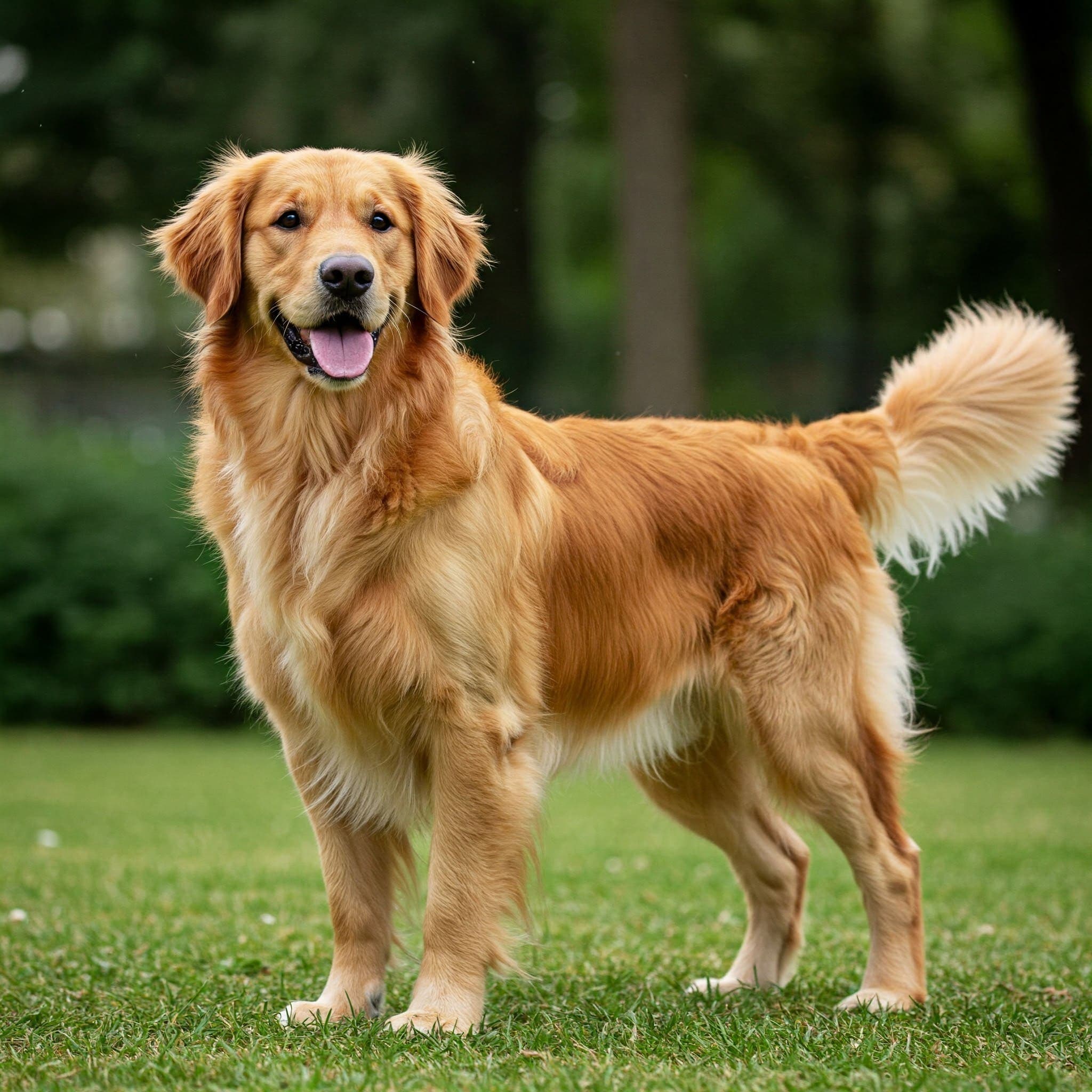
- The golden retriever has a dense, water-repellent double coat; firm, resilient outer coat (straight or wavy); untrimmed natural ruff; moderate feathering on forelegs/underbody; heavier feathering on neck, thighs, tail underside. They also have a short, even coat on head, paws, front of legs.
- Eye Size & Color
- The golden retriever has friendly, intelligent expression; medium-large; dark, close-fitting rims; set well apart, reasonably deep. Dark brown preferred (medium brown acceptable).
- Ear Size & Shape
- They have rather short; front edge attaches well behind and just above eye, falling close to cheek; tip should just cover eye when pulled forward.
- Tail
- They have well set on, thick/muscular at base, follows natural line of croup; bones extend to (not below) hock. Carried with merry action, level or moderate upward curve; never curled over back or between legs.
Description of Golden Retrievers Appearance

👀 How does Golden Retriever look like?
- The Golden Retriever has a symmetrical, powerful, active build, exuding soundness. They display a kindly expression and move with a smooth, powerful gait with good reach.
- Their hallmark is a dense, water-repellent double coat, straight or wavy, in shades of lustrous gold. Feathering is present on the neck, legs, underbody, and tail.
- The head of the golden retriever is broad with a well-defined stop, a deep, wide foreface, and a straight muzzle. The nose is typically black or brownish-black. Eyes are dark brown and convey intelligence. Ears are relatively short and fall close to the cheek.
- Their body is well-balanced, short-coupled, and deep through the chest, with a strong, level backline. The tail is carried with a characteristic merry action.
Coat Colors of Golden Retriever dogs
Pale Gold
Golden
Rich Golden
Deep Reddish Gold
Cream
Distinctive Features of Golden Retriever dog breeds
- Golden Retriever has a lustrous golden coat in various shades
- They have a broad head with a friendly and intelligent gaze
- They have relatively short ears falling close to the cheek
- They have a straight muzzle
- Golden Retrievers has a merry tail action in motion
- They have a symmetrical, powerful, active build
Golden Retriever Environment, Barking, Trainability and More...
Barking Level of Golden Retriever
Moderate
Golden Retrievers typically bark to alert their owners to strangers or new situations, but are not usually excessive barkers. Puppies may bark more frequently.
Trainability of Golden Retriever
High
Golden Retrievers are highly trainable due to their intelligence and eagerness to please. They respond very well to positive reinforcement methods.
Energy Level of Golden Retriever
High
Golden Retrievers are energetic dogs requiring plenty of daily exercise (at least one hour) to remain happy, healthy, and well-behaved.
Friendly Environment Description of Golden Retrievers
- Golden Retrievers thrive in environments with ample space and where they are part of family activities. A securely fenced yard is highly recommended.
- They can adapt to apartment living if their significant daily exercise (at least one hour) and mental stimulation needs are diligently met.
- They desire close companionship and can be prone to separation anxiety if left alone for extended periods.
- Mental stimulation through jobs or activities is important for their well-being.
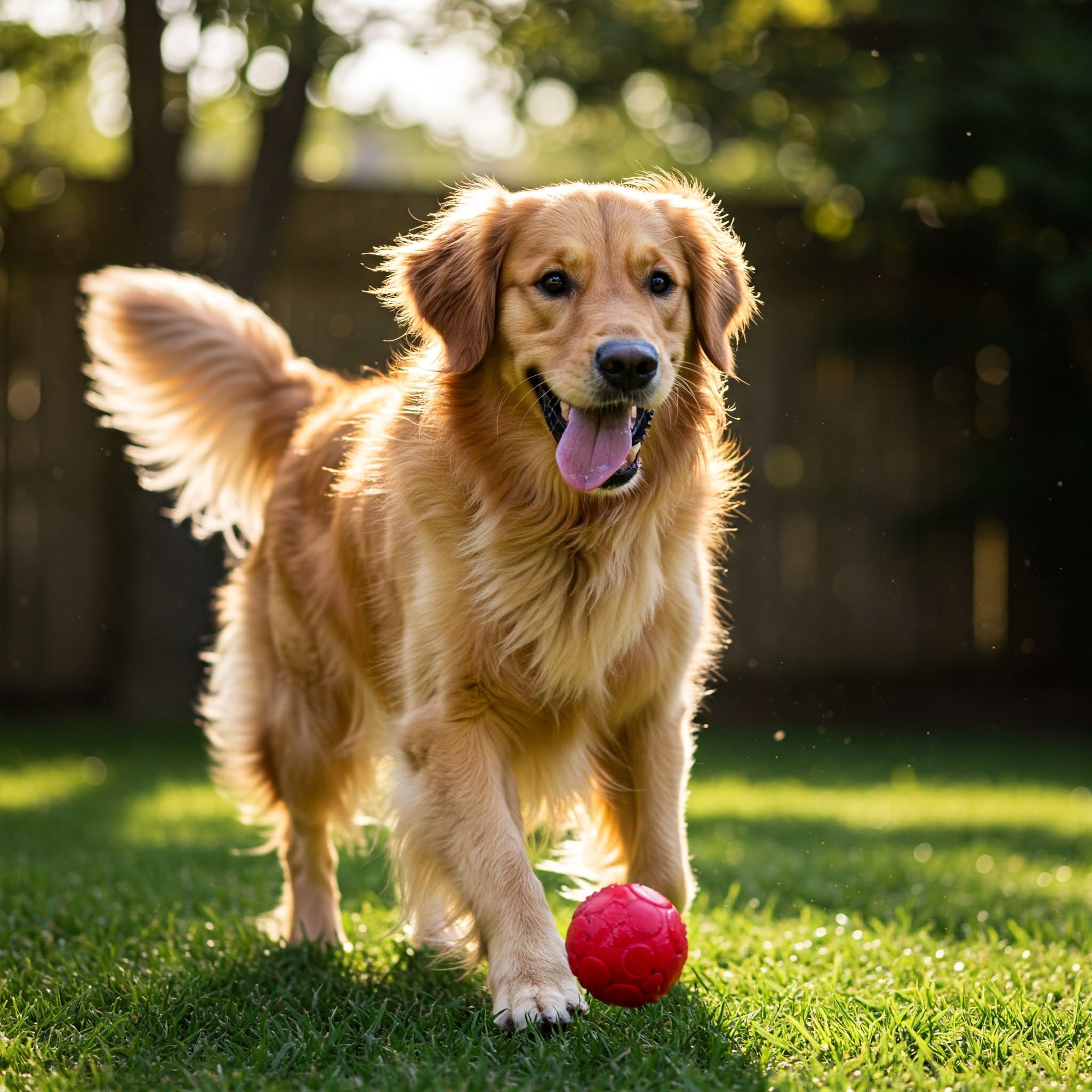
🏠 Golden Retriever dog breed in its home environment
Personality Traits of Golden Retriever dog breed
FriendlyReliableTrustworthyEagerAlertSelf-confidentKindly ExpressionAffectionate ('lovey-dovey', 'velcro dogs')Patient & Tolerant (with children)Open to StrangersPlayful (retains puppyish behavior into adulthood)Vigilant (alert barking)Highly AdaptableEager to PleaseIntelligent
Nature
Renowned for a friendly, reliable, and trustworthy temperament. They are eager, alert, self-confident, and consistently display a kindly expression.
Affectionate
Exceptionally affectionate with families, often described as 'lovey-dovey' and can be 'velcro dogs' due to their desire for closeness.
With Children
Generally exhibit a good nature with young children, displaying patience and tolerance, making them excellent family pets. Supervision is always recommended.
With Other Dogs
Generally good and friendly in interactions with other dogs, though supervised introductions are prudent.
With Strangers
Hallmark openness to strangers; often greet everyone as a potential new best friend. Lack of aloofness.
Protective
Possess a vigilant nature and may bark to alert to strangers, but are not typically strong guard dogs.
Adaptability
Known for high adaptability, readily adjusting to various living situations, provided their needs are met.
Golden Retrievers are good with:
FamiliesYoung Children (supervised)Other Dogs (with proper introduction)Strangers
Golden Retriever Dog Breed Care & Grooming Needs
Shedding Level of Golden Retriever
High
Golden Retrievers shed moderately throughout the year, with heavy shedding periods ('blowing coat') in spring and fall.
Grooming Needs of Golden Retriever
Moderate to High
Regular brushing (1-2 times/week, daily during heavy shedding) is essential. Baths every 1-3 months. Regular nail trims, ear cleaning, and dental care needed.
Grooming Tips
Use a slicker brush, undercoat rake, and bristle brush. Bathe as needed (every 1-3 months) with dog-specific shampoo. Trim nails monthly. Clean ears weekly with a vet-approved solution. Brush teeth 2-3 times a week. Trim hair between paw pads. Professional grooming every 8-10 weeks can be beneficial. Do NOT shave their double coat.
Drooling Frequency of Golden Retriever
Low to Moderate
Generally less likely to drool excessively. May drool in anticipation of food, when excited, or leave a small trail of water after drinking.
Golden Retrievers Daily Exercise Requirements
Minimum Daily Activity of Golden Retriever
At least 1 hour daily (ideally more, split into multiple sessions)
Active dogs needing substantial daily exercise. A fenced yard is strongly recommended for safety and roaming. Can adapt to apartments if exercise (1+ hour daily), playtime, and mental stimulation are diligently provided.
Recommended Activities for Golden Retrievers
Daily walks (at least 1 hour total)Regular playtime (fetch, tug-of-war)Swimming (natural pastime for many)HikingBike rides (alongside owner)Canine sports (agility, obedience, tracking, field trials)
Living Space Compatibility of Golden Retrievers
Yard Requirement
Fenced Yard Strongly Recommended
A fenced yard (5-6 feet high, secure gates) is ideal for safety and exercise. Provide shade and constant access to fresh water outdoors.
Apartment Living: Not Ideal
Can adapt to apartment living if exercise needs (at least 1 hour daily) are diligently met, along with mental stimulation. Indoor space should be adequate. Be mindful of potential barking.
Living Considerations for Golden Retrievers
- High energy levels require significant daily exercise commitment.
- Heavy shedding requires regular and consistent grooming.
- Prone to separation anxiety if left alone for extended periods.
- Mouthy as puppies; require training and appropriate chew toys.
- Predisposition to certain health issues (cancer, joint problems).
- Can be messy drinkers, leaving water trails.
- Friendly nature means they lack strong guarding instincts.
Golden Retriever Dog Lifespan and Health Issues
Average Lifespan of Golden Retrievers
10-12years
Common Health Issues of Golden Retrievers
Hip and Elbow Dysplasia
Malformation of hip/elbow joints, leading to arthritis and pain.
Cancer
Higher incidence; common types include Lymphoma, Hemangiosarcoma, Mast Cell Tumors, Osteosarcoma. Leading cause of death.
Eye Conditions
Juvenile Cataracts, Pigmentary Uveitis, Progressive Retinal Atrophy (PRA), Retinal Dysplasia, Glaucoma.
Heart Issues
Subvalvular Aortic Stenosis (SAS), Dilated Cardiomyopathy (DCM).
Hypothyroidism
Underactive thyroid gland; symptoms include weight gain, lethargy, hair loss.
Allergies
Skin allergies (atopic dermatitis), food allergies, ear allergies are prevalent.
Ear Infections
Susceptible due to floppy ears; require regular cleaning.
Bloat (Gastric Dilatation-Volvulus - GDV)
Serious condition due to deep-chested build; requires immediate veterinary attention.
Preventative Care of Golden Retrievers
- Choose reputable breeders who screen for inherited conditions (hip/elbow dysplasia, eye conditions, heart diseases).
- Regular veterinary check-ups for early detection and management.
- Maintain a healthy weight through proper diet and exercise.
- Be aware of historical lifespan decrease (from 16-17 years) possibly due to modern breeding/environmental factors.
- Proactive care and awareness of potential predispositions are crucial.
What to feed Golden Retriever? Golden Retriever's diet and Nutrition
Recommended Diet for Golden Retriever dog breed
High-quality dog food appropriate for their life stage (puppy, adult, senior). A protein-rich diet is generally recommended. Avoid excessive fillers and artificial additives.
Typical Feeding Schedule of Golden Retrievers
| Age Group | Feeding Frequency |
|---|---|
| Puppies (under 6 months) | 3-4 meals/day |
| Adults | 2 meals/day (morning and evening) |
| Seniors | 2 meals/day, possibly adjusted formula/portions |
Sensitivities & Considerations of Golden Retrievers
Potential Food Sensitivities of Golden Retrievers
More prone to food sensitivities and allergies. Common allergens include certain proteins (beef, chicken, fish, dairy) and grains (wheat, corn, soy). Symptoms: itchy skin, recurring ear infections, digestive upset (vomiting, diarrhea). Diagnosis via elimination diet under veterinary guidance.
Dietary Considerations of Golden Retrievers
- Follow feeding guidelines from the dog food manufacturer (based on age, weight, activity level).
- Measure food accurately to avoid overfeeding.
- Choose food with high-quality, easily digestible protein sources (real meat/fish) as primary ingredients.
- Ensure diet contains essential fatty acids (omega-3, omega-6) for healthy skin/coat.
- Opt for brands with natural preservatives (Tocopherols - Vitamin E, rosemary).
Weight Management of Golden Retrievers
Monitor weight and body condition regularly. Signs of healthy weight: easily feel ribs, visible waistline from above, abdomen tucked up from the side.
Signs of Healthy Weight of Golden Retrievers
- Easily palpable ribs without pressing too hard.
- Visible waistline when viewed from above.
- Abdomen tucked up when viewed from the side.
Tips for Healthy Feeding of Golden Retrievers
- Establish a consistent feeding schedule.
- Avoid free-feeding to prevent overeating.
- Use a standard measuring cup for correct portion sizes.
- Limit treats; choose healthy, low-calorie options (e.g., carrots, apple slices).
- Avoid giving in to begging behavior frequently.
- Regularly assess weight and body condition to adjust diet as needed.
Is Golden Retriever a good match for you?
Golden Retrievers are wonderful for many, excelling as family dogs with an active lifestyle. Potential owners must be prepared for their high energy, grooming needs, desire for companionship, and potential health concerns. Their friendly nature makes them poor guard dogs.
Golden Retrievers are a Great Match For
- Families with children of various ages (due to friendly and patient nature).
- Active individuals or families who enjoy outdoor activities.
- Households with other pets (generally get along well).
- Owners looking for a highly trainable and eager-to-please dog.
- Those who can provide significant daily exercise and mental stimulation.
- People in various settings, including apartments, IF exercise needs are met.
Golden Retrievers May be Challenging For
- Individuals unable to commit to high daily exercise needs (at least 1 hour).
- Owners who prefer low-shedding or low-maintenance grooming dogs.
- Households where the dog would be left alone for extended periods (prone to separation anxiety).
- Those unprepared for 'mouthy' puppy behavior and potential chewing.
- Owners not prepared for potential breed-specific health issues and veterinary costs.
- People seeking a strong guarding instinct in a dog.
- Individuals who dislike 'messy drinkers' (may leave water trails).