Sniffing...
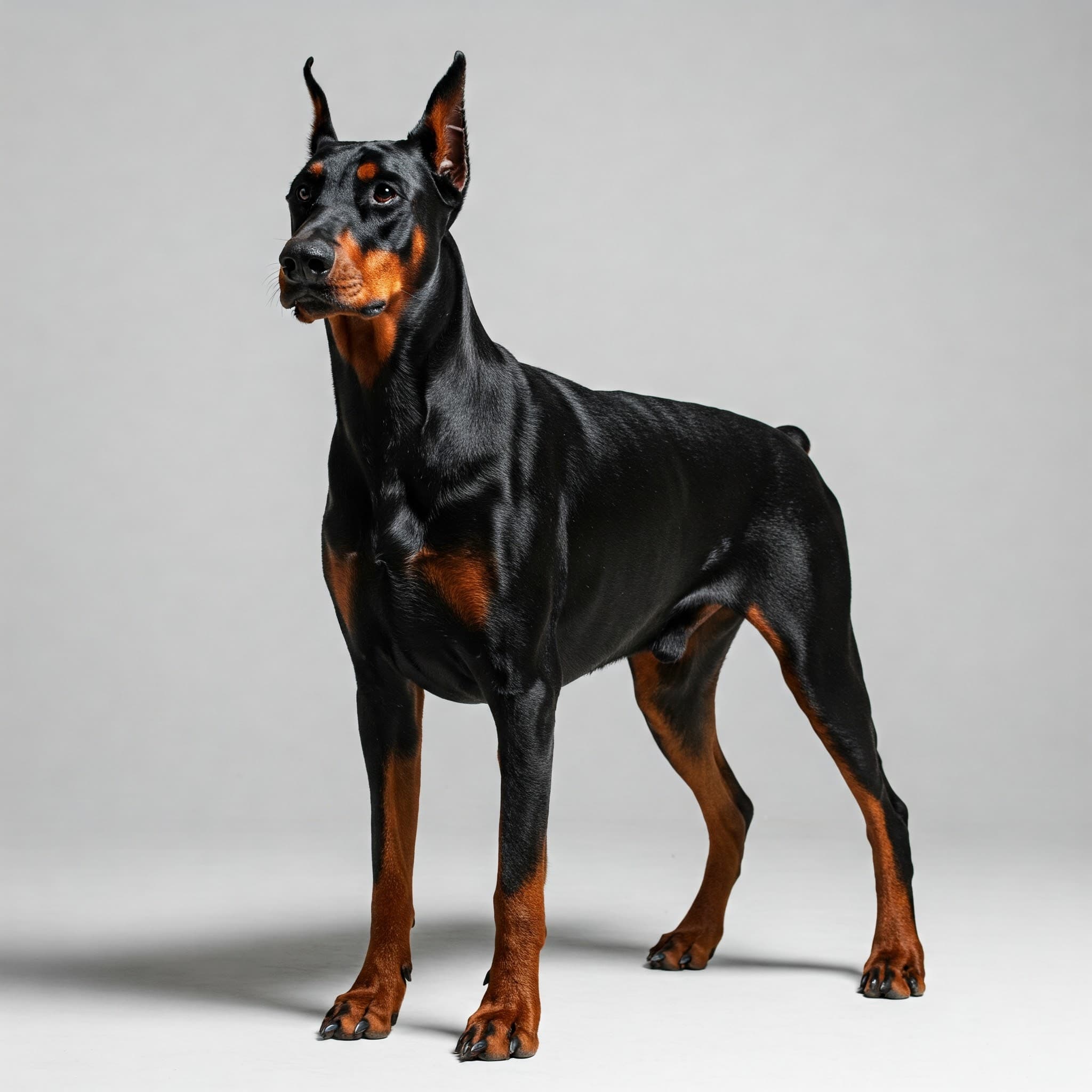
Germany
Doberman Pinscher
Working GroupGuardian DogLoyalIntelligentFearlessMedium-Large10-12 years
The Doberman Pinscher stands as a distinguished breed within the canine world, recognized for its medium-large stature and a rich history rooted in Germany. Developed in the late 19th century, this breed quickly garnered attention for its capabilities as both a formidable protector and a devoted companion. The Doberman's reputation is built upon a foundation of keen intelligence, unwavering loyalty, and a notable fearlessness, attributes that have paved its way into various working roles and the hearts of many as a cherished family member. The initial impression conveyed by numerous sources highlights the fascinating duality of the Doberman Pinscher: a dog capable of significant protective prowess while simultaneously exhibiting deep affection and attachment to its human family. This inherent complexity suggests a breed that necessitates a thorough and nuanced understanding of its multifaceted needs and inherent capabilities.
Important Disclaimer:The information provided on this page about the Doberman Pinscher is intended for general knowledge and informational purposes only and does not constitute professional veterinary advice. Always consult with a qualified veterinarian for any health concerns or medical conditions related to your dog. The breed identification provided by our AI tool is a prediction and should not be considered a definitive diagnosis.
Doberman Pinscher Dog Breed Overview
- Breed Group
- Working Group
- Origin
- Germany
- Purpose
- Personal protector, Guard dog, Working roles, Family companion
- Size
- Medium to Large
- Other Names
- Dobermann-pinscher (historical)
- Lifespan
- 10-12 years
- Temperament
- LoyalAlertFearlessIntelligentEnergeticConfidentObedientDevotedProtective
- Activity Level
- High
- Trainability
- Exceptionally trainable, Highly intelligent, Strong desire to please
- Grooming
- Low (weekly brushing)
- Shedding
- Moderate (seasonal increases)
- Barking
- Moderate (typically alert barking)
- Good with
- Health Issues
- Dilated Cardiomyopathy (DCM)Gastric Dilatation-Volvulus (GDV/Bloat)Hip DysplasiaVon Willebrand's Disease (vWD)HypothyroidismProgressive Retinal Atrophy (PRA)Wobbler Syndrome
- Suited For
- Active individuals or families
- Owners seeking a loyal and protective companion
- Those committed to consistent training and early socialization
- Owners who appreciate a 'Velcro dog'
- Families (with proper socialization & training), Children (supervised, if raised together & socialized), Other Dogs (with early socialization, caution for same-sex aggression)
Doberman Pinscher History & Origin: Evolution of the Doberman
The story of the Doberman Pinscher begins in the late 1880s in Apolda, a town in the region of Thuringia, Germany. Karl Friedrich Louis Dobermann, a tax collector with additional roles as a night watchman and dog catcher, is credited with the breed's creation. Dobermann's profession as a tax collector was fraught with danger, requiring him to travel through potentially hostile areas carrying significant sums of money. This inherent risk motivated him to develop a canine companion that would serve as a reliable personal protector. His aim was to breed what he termed the "ultimate Terrier," envisioning a dog that was not only fast and hardy but also possessed sound temperament and high intelligence.
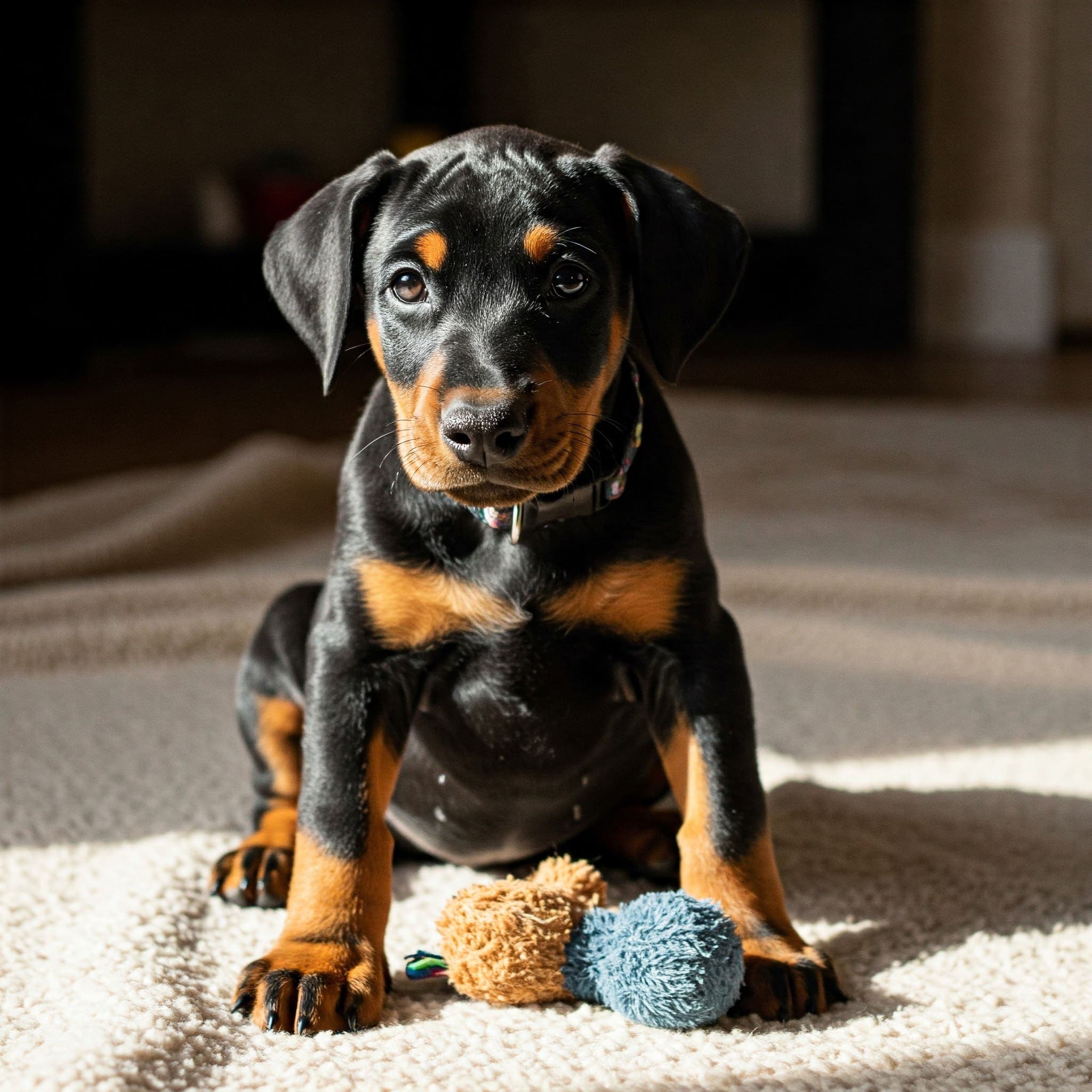
🐶 Doberman Pinscher puppy
History of Doberman Pinscher
Developed in the late 1880s in Apolda, Germany, by Karl Friedrich Louis Dobermann, a tax collector needing a personal protector. His goal was an 'ultimate Terrier' – fast, hardy, with sound temperament and high intelligence.
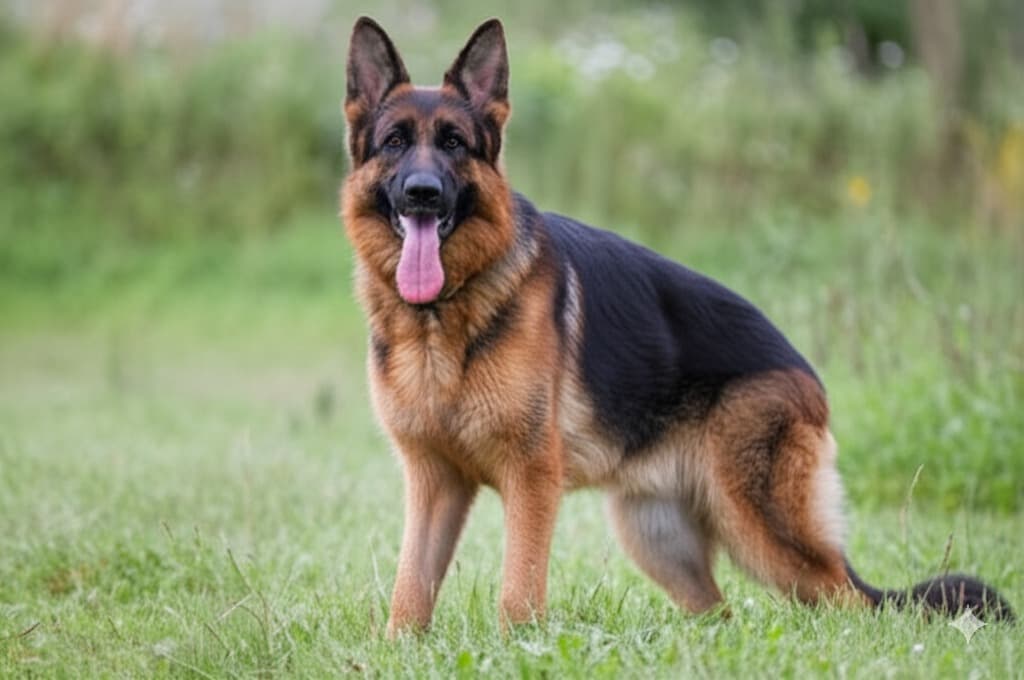
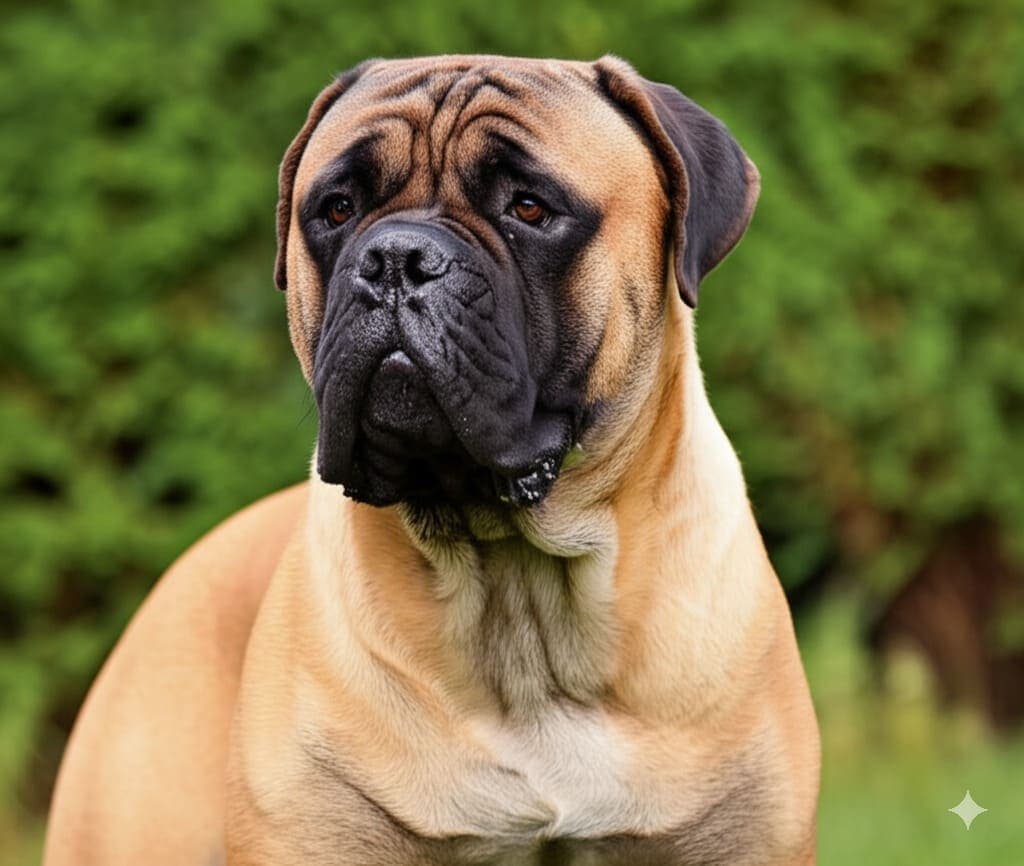
Precise breeds used are speculative, but likely included Old German Shepherd, Rottweiler, German Pinscher, Black and Tan Terrier, Weimaraner, Beauceron, and Black English Greyhound. Documented crosses with Greyhound and Manchester Terrier refined appearance.
After Dobermann's death in 1894, Otto Goeller further developed the breed, founding the first Doberman Pinscher club and establishing initial standards. Originally 'Dobermann-pinscher', 'pinscher' was later dropped in Germany and Britain, but retained in the US and Canada.
Evolution and Purpose of Doberman Pinscher
Early Dobermans had 'sharp' temperaments suited for guarding. Selective breeding shifted focus to a more balanced temperament: intelligence, bravery, and loyalty.
Reputable breeders now prioritize temperament, health, and trainability. The breed evolved from a 'rough-hewn protector' to a sleek, elegant, athletic dog, versatile for working roles and as a devoted family companion.
Did you know?
The Doberman Pinscher was named after its creator, Karl Friedrich Louis Dobermann, who developed the breed in Germany in the late 19th century for personal protection.
Doberman Pinscher Dog Breed Size and Physical Traits
Size of Doberman Pinscher dog Breeds
Size Category
Medium to Large
Height
Male
26-28 inches
Female
24-26 inches
Weight
Male
75-100 lbs (34-45 kg)
Female
60-90 lbs (27-41 kg)
Appearance of Doberman Pinscher dog Breeds
- Coat Type
- Short, smooth, hard, thick, and close-lying
- Eye Size & Color
- Almond-shaped, moderately deep-set, vigorous and energetic expression. Iris medium to darkest brown in black dogs; in red, blue, fawn, iris blends with markings (darkest preferred).
- Ear Size & Shape
- Set high on the skull. Can be natural (drop-shaped, inner edge/tip close to head) or cropped (typically long, carried erect).
- Tail
- Natural tail is fairly long. Often docked short (usually at second joint), appearing as a continuation of the spine.
Description of Doberman Pinschers Appearance
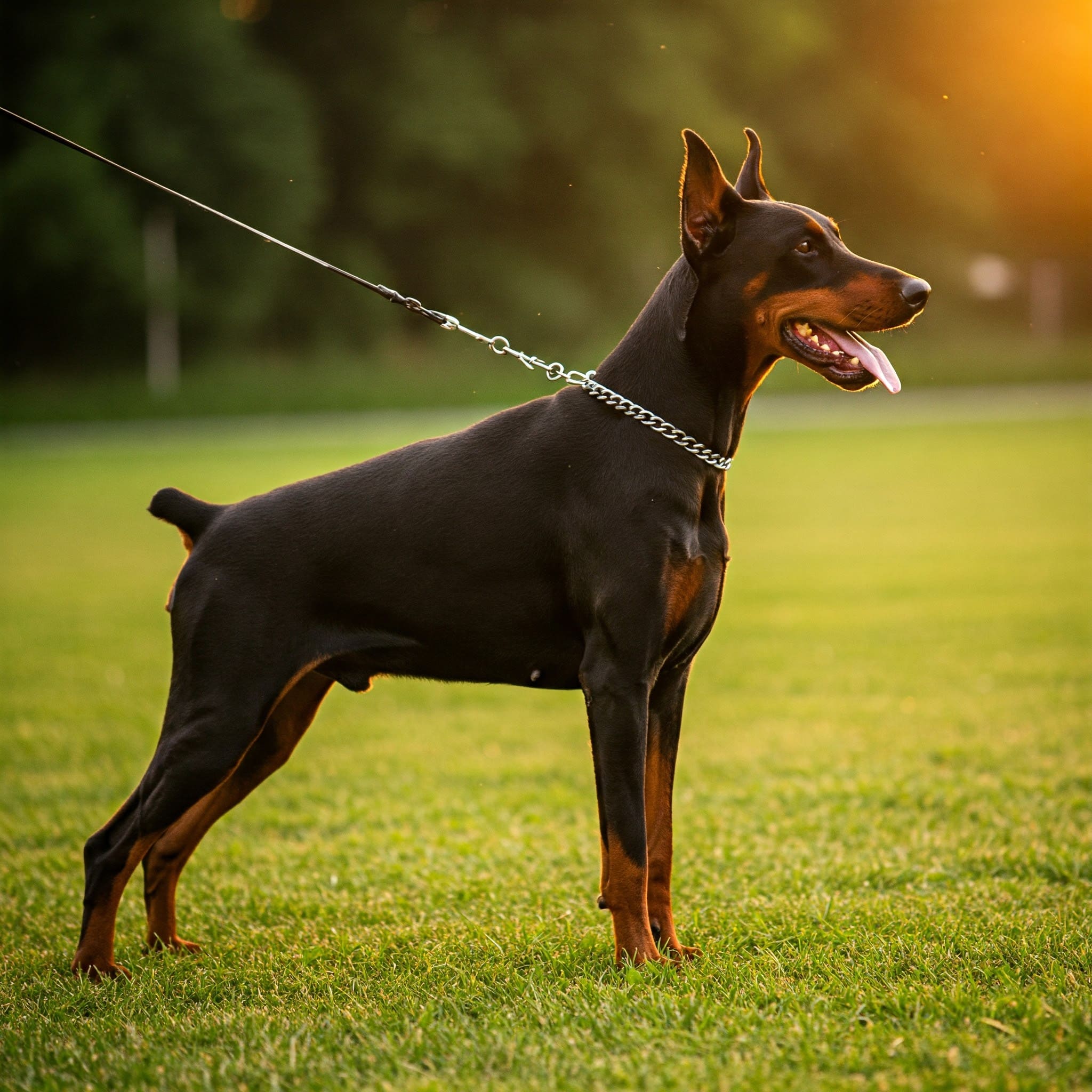
👀 How does Doberman Pinscher look like?
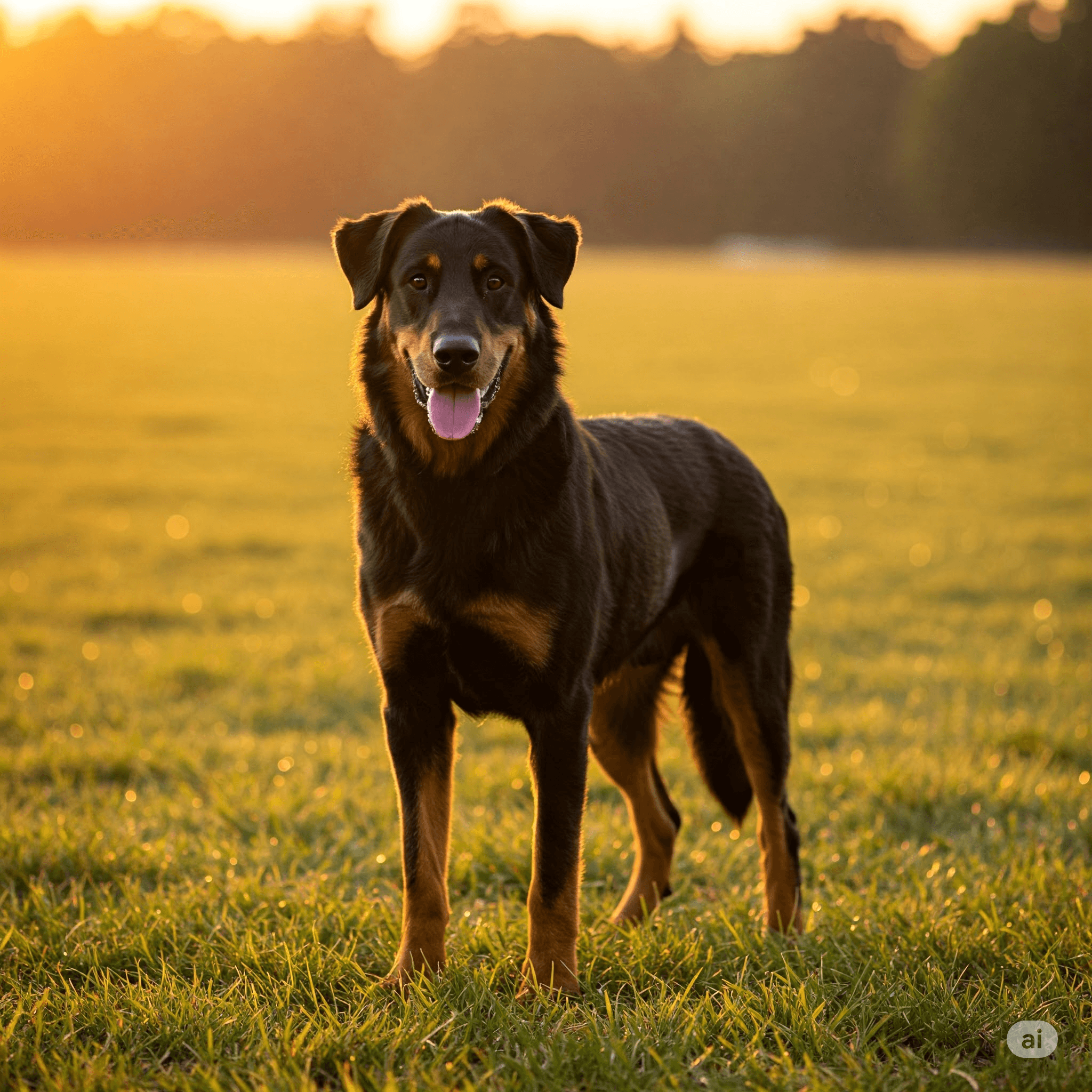
- The Doberman Pinscher is a medium-large dog, conveying an impression of elegance, nobility, power, and grace.
- They possess a square, compact, muscular body built for endurance and speed. The head is long and dry, like a blunt wedge.
- Males stand 26-28 inches and females 24-26 inches. Weight for males is around 75-100 lbs, females 60-90 lbs.
- The coat of doberman is short, smooth, hard, thick, and close-lying. Recognized colors are black, red, blue, and fawn (Isabella), all with sharply defined rust markings. White is a disqualifying fault.
- Eyes are almond-shaped with a vigorous expression. Ears can be natural or cropped, and tails are often docked.
Coat Colors of Doberman Pinscher dogs
Black (with rust markings)
Red (with rust markings)
Blue (with rust markings)
Fawn (Isabella, with rust markings)
Distinctive Features of Doberman Pinscher dog breeds
- Doberman has an overall appearance of elegance and nobility.
- Doberman has a square, compact, muscular body built for endurance and speed.
- They posses a sleek and regal physique conveying power and grace.
- Doberman has a well-muscled, athletic build with clean-cut lines.
- Doberman has a long and dry head, resembling a blunt wedge shape.
- They have sharply defined rust markings in specific patterns.
- Doberman has an alert and watchful expression, proud carriage.
Doberman Pinscher Environment, Barking, Trainability and More...
Barking Level of Doberman Pinscher
Moderate
Dobermans are considered moderate barkers, typically vocalizing to alert owners to potential disturbances or threats. Excessive barking can occur due to boredom, territorial behavior, or separation anxiety, but can be managed with training and addressing underlying causes.
Trainability of Doberman Pinscher
High
Dobermans are highly intelligent with a strong desire to please, making them exceptionally trainable. Consistent, positive reinforcement methods from an early age are effective. Owners need to be firm but gentle leaders, as Dobermans can be sensitive to harsh techniques.
Energy Level of Doberman Pinscher
High
Dobermans are an energetic breed with high activity levels, requiring 1-2 hours of daily exercise to maintain physical and mental well-being. Insufficient exercise can lead to destructive behaviors.
Friendly Environment Description of Doberman Pinschers
- Dobermans thrive indoors with their families and need protection from extreme cold.
- Access to a securely fenced yard is highly beneficial. While adaptable to apartment living, their substantial exercise and mental stimulation needs must be consistently met.
- They require close interaction with their human families and should be included in daily activities.
- Early socialization is crucial for well-rounded behavior, especially regarding strangers and other animals.

🏠 Doberman Pinscher dog breed in its home environment
Personality Traits of Doberman Pinscher dog breed
LoyalAlertFearlessIntelligentEnergeticConfidentObedientDevotedProtective
Nature
Exceptional temperament: loyal, alert, fearless, intelligent, energetic, confident, and obedient. Known for profound devotion, often called 'Velcro dogs'.
Affectionate
Form incredibly strong bonds with owners, exhibiting a strong preference for staying close.
With Children
Generally good if raised together and properly socialized; adult supervision is always recommended.
With Other Dogs
Can coexist peacefully if well-socialized from a young age, but potential for same-sex aggression exists.
With Strangers
Often wary and reserved around individuals they do not know.
Protective
Inherent protective instincts make them excellent watchdogs and guard dogs, readily alerting families to perceived threats.
Adaptability
Can adapt to apartment living if substantial exercise needs are met. Generally thrive best with a fenced yard. Primarily indoor dogs, sensitive to cold weather.
Doberman Pinschers are good with:
Families (with proper socialization & training)Children (supervised, if raised together & socialized)Other Dogs (with early socialization, caution for same-sex aggression)
Doberman Pinscher Dog Breed Care & Grooming Needs
Shedding Level of Doberman Pinscher
Moderate
Dobermans shed moderately throughout the year, with potential increases during spring and fall. Female Dobermans may shed more, especially during pregnancy. Short, prickly hairs can stick to fabrics.
Grooming Needs of Doberman Pinscher
Low
Low grooming requirements due to short coat. Weekly brushing with a short-bristled brush or grooming mitt recommended. Occasional bathing (monthly or every 2-3 months). Regular nail trimming, teeth brushing, and ear cleaning are essential.
Grooming Tips
Brush weekly to keep coat shiny and minimize shedding. Bathe occasionally (monthly or every 2-3 months) with mild dog shampoo. Trim nails regularly. Brush teeth at least twice a week. Clean ears every few days.
Drooling Frequency of Doberman Pinscher
Low
Dobermans are not generally known for excessive drooling. Some drooling may occur, but it's typically not a significant issue.
Doberman Pinschers Daily Exercise Requirements
Minimum Daily Activity of Doberman Pinscher
1-2 hours per day
Dobermans have high energy levels and require significant daily exercise (1-2 hours) for physical and mental well-being. Suitable activities include brisk walks, jogging, running in secure areas, interactive play, and dog sports. Puppies need shorter, controlled exercise.
Recommended Activities for Doberman Pinschers
Brisk walksJoggingRunning in securely fenced areasInteractive play sessionsDog sports (Agility, Obedience, Tracking, Flyball)FetchTug-of-warPuzzle toysScent workSwimmingHiking
Living Space Compatibility of Doberman Pinschers
Yard Requirement
Fenced Yard Highly Beneficial
Access to a securely fenced yard is highly beneficial, providing a safe space to run and play.
Apartment Living: Not Ideal
Can adapt to apartment living if their substantial exercise and mental stimulation needs are consistently met. Thrive best in homes with at least an average-sized fenced yard.
Living Considerations for Doberman Pinschers
- Must live indoors and be protected from extreme cold.
- Thrive on close interaction with their human family.
- High energy requires significant daily exercise and mental stimulation.
- Requires early and consistent positive reinforcement training.
- Early socialization is crucial for interactions with children, other dogs, and strangers.
- Potential for strong prey drive with smaller animals; caution needed.
- Potential for same-sex aggression with other dogs.
Doberman Pinscher Dog Lifespan and Health Issues
Average Lifespan of Doberman Pinschers
10-12years
Common Health Issues of Doberman Pinschers
Dilated Cardiomyopathy (DCM)
Serious heart condition where muscle thins and weakens, reducing blood pumping. Inherited. Symptoms: exercise intolerance, weakness, coughing, collapse, sudden death. Regular cardiac screening (Holter, echocardiogram) from 2 years old; genetic testing available.
Gastric Dilatation-Volvulus (GDV/Bloat)
Life-threatening condition where stomach fills with gas and can twist. Symptoms: distended abdomen, nonproductive retching, drooling, weakness. Prevent by feeding multiple small meals, avoiding elevated bowls, and restricting exercise around meals. Prophylactic gastropexy may be considered.
Hip Dysplasia
Inherited condition where thighbone doesn't fit hip joint, leading to pain/arthritis. Symptoms: pain, lameness in rear legs. OFA certification of parents. Maintain healthy weight.
Von Willebrand's Disease (vWD)
Inherited bleeding disorder due to clotting protein deficiency. Symptoms: spontaneous hemorrhaging, prolonged bleeding. DNA test available to determine status.
Hypothyroidism
Underactive thyroid gland, slowing metabolism. Symptoms: weight gain, lethargy, brittle coat, skin/ear infections. Annual thyroid testing. Treatable with medication.
Progressive Retinal Atrophy (PRA)
Inherited eye diseases causing retinal deterioration, leading to blindness. Symptoms: night blindness progressing to daytime vision loss. Screening by veterinary ophthalmologist.
Wobbler Syndrome (CVI)
Spinal cord compression in the neck. Symptoms: unsteady/wobbly gait, neck pain. Diagnosis via imaging. Treatment: medication, neck brace, or surgery.
Cancer
Potential for certain types of cancer within the breed. (Not detailed in table but mentioned in text)
Preventative Care of Doberman Pinschers
- Choose breeders who perform recommended health tests (Hip, Cardiac, Ophthalmologist, Thyroid, vWD DNA).
- Regular veterinary check-ups and screenings, especially annual heart exams from 2 years old.
- Provide proper nutrition, regular exercise, and sufficient mental stimulation.
- Maintain a healthy weight to reduce stress on joints.
- Early socialization and consistent training contribute to overall well-being.
What to feed Doberman Pinscher? Doberman Pinscher's diet and Nutrition
Recommended Diet for Doberman Pinscher dog breed
High-quality dog food formulated for large breeds and specific life stage (puppy, adult, senior). Ensure proper balance of protein and fat. Choose foods with high-quality animal-based protein sources, avoiding excessive fillers and additives. Omega-3 fatty acids can be beneficial for coat/skin. If predisposed to copper storage disease, monitor copper intake.
Typical Feeding Schedule of Doberman Pinschers
| Age Group | Feeding Frequency |
|---|---|
| Puppies (under 6 months) | 3-4 meals/day |
| Adolescents (6-12 months) | 2-3 meals/day (transitioning to 2) |
| Adults | 2 meals/day (recommended to reduce bloat risk) |
| Seniors | 2 meals/day, potentially with adjusted dietary needs |
Sensitivities & Considerations of Doberman Pinschers
Potential Food Sensitivities of Doberman Pinschers
Can exhibit sensitivities to common ingredients like chicken, beef, grains, dairy, and eggs. Signs include skin irritation and gastrointestinal issues. Consult a veterinarian for diagnosis and management, possibly involving an elimination diet.
Dietary Considerations of Doberman Pinschers
- Predisposed to bloat; feed multiple smaller meals, avoid one large meal daily.
- Avoid feeding from elevated bowls and restrict strenuous exercise 1-2 hours before/after meals.
- Some sources suggest avoiding dog foods listing oils/fats among the first four ingredients to mitigate bloat risk.
- Monitor food intake and adjust based on activity level and body condition.
- Always provide access to fresh, clean water.
Weight Management of Doberman Pinschers
Observe body condition: a healthy Doberman should have a defined waist (viewed from above) and abdomen tucked up (from side). Ribs should be easily felt beneath a thin layer of fat. Consult a veterinarian for a professional assessment.
Signs of Healthy Weight of Doberman Pinschers
- Defined waist when viewed from above.
- Abdomen tucks up when viewed from the side.
- Ribs are easily palpable beneath a thin layer of fat.
Tips for Healthy Feeding of Doberman Pinschers
- Monitor food intake and adjust portions for activity level and body condition.
- Ensure constant access to fresh, clean water.
- Use treats sparingly, primarily for training purposes.
- Consider adding omega-3 fatty acids for coat and skin health.
- If copper storage disease is a concern, be mindful of copper-rich foods.
- Follow a consistent feeding schedule.
Is Doberman Pinscher a good match for you?
The Doberman Pinscher can be an excellent match for active individuals or families prepared to provide ample physical exercise, mental stimulation, consistent leadership, and ongoing training. They thrive with owners who desire a loyal, devoted, and protective companion.
Doberman Pinschers are a Great Match For
- Active individuals or families capable of providing 1-2 hours of daily exercise.
- Owners seeking a loyal, devoted, and protective companion and vigilant family guardian.
- Those willing to provide consistent leadership and engage in ongoing positive reinforcement training.
- People who desire a close bond with their dog (appreciate a 'Velcro dog').
- Owners who find low grooming requirements appealing.
Doberman Pinschers May be Challenging For
- Individuals with less active lifestyles or unable to meet high exercise needs.
- Owners who cannot provide consistent training and a firm but fair approach.
- Those unable to commit to early and ongoing socialization (can lead to overprotectiveness/aggression).
- Households where the dog would be left alone for extended periods (potential for separation anxiety).
- Very passive owners, as Dobermans have a strong personality.
- Homes with existing same-sex dogs if socialization is not thorough.
- Those concerned about moderate shedding or strong prey drive with small pets.
- Owners unprepared for potential breed-specific health issues and associated care costs.
- Generally not recommended for novice owners due to strength, intelligence, and training needs, unless exceptionally dedicated and prepared.