Sniffing...
Germany
Rottweiler
Working GroupGuardian DogLoyalConfidentCourageousLarge8-10 years
The Rottweiler, a robust and intelligent working breed, boasts a lineage tracing back to the Roman Empire. Originally bred for herding and guarding livestock, their historical utility profoundly shaped their inherent traits of strength, loyalty, and protective instincts. Despite their imposing physical presence, well-bred and properly socialized Rottweilers are known for their calm, confident, and affectionate disposition towards their families, often earning them the moniker 'gentle giants.' This profile delves into the rich history, distinctive physical attributes, complex temperament, and care requirements of this remarkable dog rottweiler dog, offering a comprehensive understanding for enthusiasts and potential owners seeking to breed Rottweilers or welcome one into their homes.
Important Disclaimer:The information provided on this page about the Rottweiler is intended for general knowledge and informational purposes only and does not constitute professional veterinary advice. Always consult with a qualified veterinarian for any health concerns or medical conditions related to your dog. The breed identification provided by our AI tool is a prediction and should not be considered a definitive diagnosis.
Rottweiler Dog Breed Overview
- Breed Group
- Working
- Origin
- Germany
- Purpose
- Herding, Guarding, Cart Pulling, Police/Military Work, Service Dog
- Size
- Medium to Large
- Other Names
- Rottie, Rottweiler Metzgerhund
- Lifespan
- 8-10 years (can be upto 11-12 years)
- Temperament
- CalmConfidentCourageousLoyalDevotedGood-naturedPlacidAlertIntelligentPlayfulEager to please
- Activity Level
- Moderate to High
- Trainability
- High (intelligent and eager to please)
- Grooming
- Low (weekly brushing)
- Shedding
- Moderate (seasonal shedding)
- Barking
- Low (barks only when necessary)
- Good with
- Health Issues
- Hip DysplasiaElbow DysplasiaSubaortic Stenosis (SAS)OsteosarcomaGastric Dilatation-Volvulus (GDV/Bloat)JLPP (Juvenile Laryngeal Paralysis & Polyneuropathy)Relatively shorter Rottweiler life expectancy compared to smaller breeds
- Suited For
- Experienced dog owners
- Owners committed to early and ongoing socialization
- Active individuals or families
- Homes with space for a large dog
- Those seeking a loyal and protective companion
- Families, Children (with supervision)
Do you know Rottweiler is among the most intelligent dog breeds?Read more about other smartest dog breeds →
Rottweiler History & Origin: Popularity of Rottweilers
The Rottweiler, often affectionately referred to as a 'Rottie,' stands as a testament to centuries of selective breeding for utility and companionship. This rottweiler breed dog, recognized globally for its distinctive black and tan markings and powerful build, carries a history deeply intertwined with human endeavor, from ancient Roman legions to modern-day service roles. This deep research report aims to provide a comprehensive and authoritative examination of the Rottweiler dog breed, moving beyond superficial descriptions to explore the intricate interplay of genetics, environment, and human stewardship that defines these remarkable canines. By synthesizing historical data, breed standards, behavioral considerations, and health predispositions, this report serves as a vital resource for anyone seeking a profound understanding of the Rottweiler, whether for responsible ownership, professional engagement, or academic interest.

Cute image of Rottie puppy
History of the Rottweiler Dog
The origins of the Rottweiler are believed to date back to the Roman Empire. Their ancestors were robust cattle-driving dogs accompanying Roman legions over the Alps, protecting soldiers and livestock. This foundational role shaped their guarding instincts and physical prowess.
In Rottweil, Germany, these drover dogs interbred with native canines, establishing the Rottweiler. Known as 'Rottweiler Metzgerhund' (Rottweil butcher's dogs), they herded livestock, pulled carts of meat, and guarded masters. Selective breeding focused on performance, fostering traits like strength, intelligence, confidence, and loyalty, which are persistent in the modern Rottweiler dog.
Purpose and Popularity of Rottweilers
The Rottweiler faced decline with railways replacing droving. Interest resurged in the early 20th century for police dogs and they served in WWI and WWII as messengers, ambulance, draught, and guard dogs. Today, Rottweilers excel in search-and-rescue, as therapy dogs, and guide dogs, highlighting their work ethic and trainability.
The first German breed standard was set in 1901. The ADRK (Allgemeiner Deutscher Rottweiler Klub) formed in 1921 and is the parent club. The AKC recognized the Rottweiler in 1931. Despite high popularity (e.g., 8th most popular in US in 2017), negative stereotypes persist, contrasting with their true nature when properly managed.
Did you know?
The Rottweiler was once known as the 'Rottweiler Metzgerhund,' which translates to 'Rottweil butcher's dog,' due to their work pulling carts of meat for butchers in Rottweil, Germany.
Rottweiler Dog Breed Size and Physical Traits
Size of Rottweiler dog Breeds
Size Category
Medium to Large
Height
Male
24-27 inches (61-68 cm)
Female
22-25 inches (56-63 cm)
Weight
Male
85-135 lbs (36-54+ kg)
Female
77-115 lbs (35-48 kg)
Appearance of Rottweiler dog Breeds
- Coat Type
- Rottweilers have a short, dense, coarse, flat double coat
- Eye Size & Color
- Rottweilers have medium-sized, almond-shaped, dark brown eyes
- Ear Size & Shape
- Rottweilers have medium-sized, pendant, triangular, wide apart ears which are mostly set on high
- Tail
- Rottweilers have a natural and strong tail, that is level with topline, and has a slight curve when attentive.
Description of Rottweilers Appearance

Physical appearance of a Rottweiler dog
- The Rottweiler is a powerfully built, medium-to-large dog, exuding strength and agility. Males are larger than females.
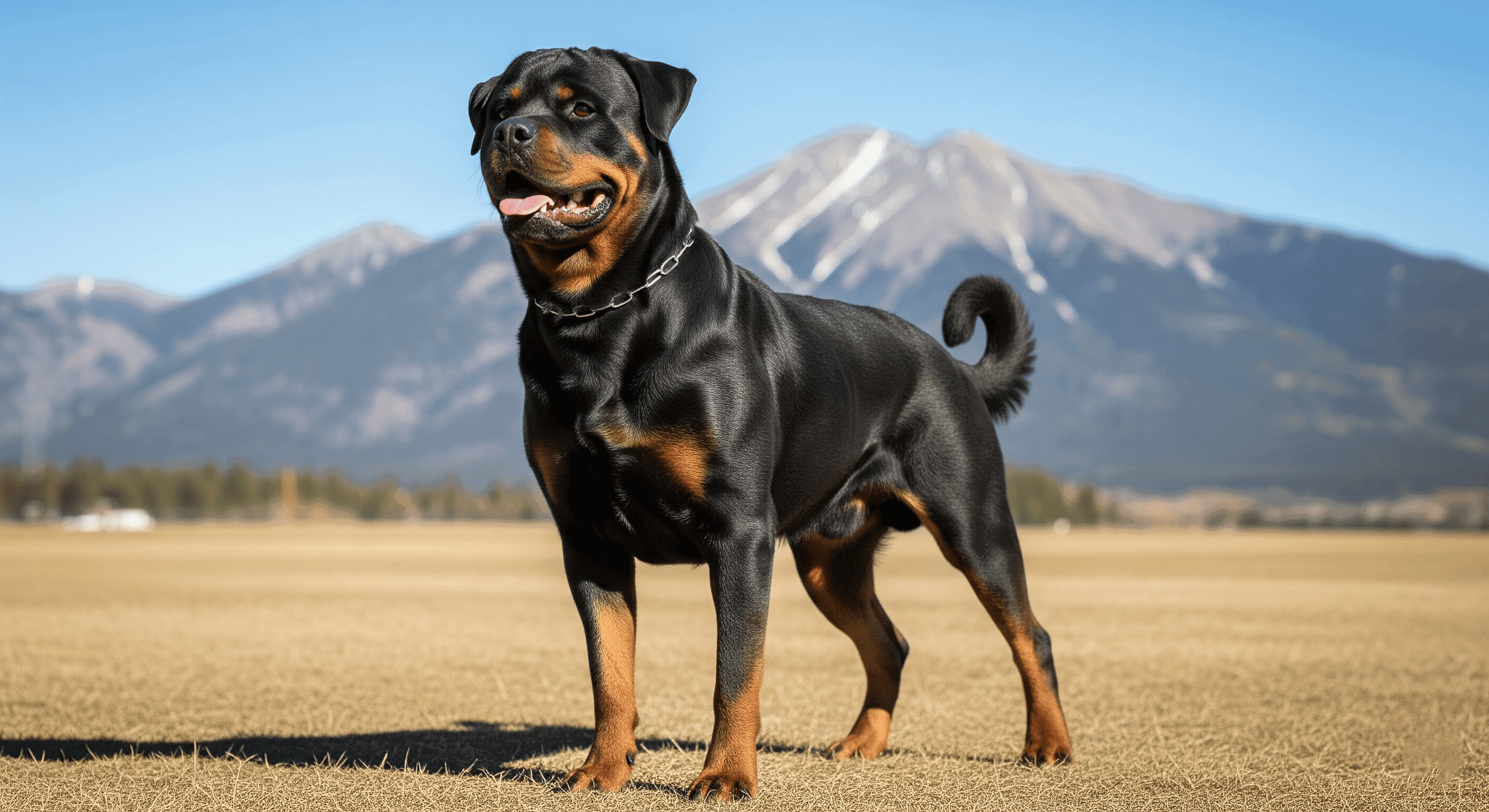
- Their coat is short, dense, and black with specific rust, tan, or mahogany markings on the cheeks, muzzle, chest, legs, and over the eyes.
- A Rottweiler has a blocky head, strong muzzle, dark almond-shaped eyes, and triangular pendant ears. Their gait is a harmonious and energetic trot. The Rottweiler life span and health can be influenced by their large size.
Coat Colors of Rottweiler dogs
Black
Tan/Rust Markings
Distinctive Features of Rottweiler dog breeds
- Rottweilers have a robust, compact, and powerful build conveying strength and endurance.
- They have a massive, blocky head, medium length, broad between ears.
- They have a square, strong muzzle; black nose; and black, close-fitting lips.
- They have a distinctive black coat with rich tan, rust, or mahogany markings.
- Rottweilers have a powerful, thickly muscled hindquarters powering an effortless trot.
- They are slow maturing, reaching full adult size by 2-3 years.
Rottweiler Environment, Barking, Trainability and More...
Barking Level of Rottweiler
Low
Rottweilers are generally calm and quiet, typically barking only when necessary to signal danger or perceived threats. Nuisance barking often indicates boredom in a Rotweiler.
Trainability of Rottweiler
High
Rottweilers are highly intelligent and biddable, eager to work and please their handlers. Consistent positive reinforcement training from an early age is essential for this dog rottweiler dog.
Energy Level of Rottweiler
Moderate to High
Rottweilers are active dogs needing 1-2 hours of exercise daily, including mental stimulation, to prevent boredom and destructive behaviors.
Friendly Environment Description of Rottweilers
- Rottweilers thrive indoors with their families, forming strong bonds. They need a secure environment due to their protective instincts.
- Early and continuous socialization is paramount for this rottweiler breed dog to differentiate threats and develop into a calm, confident companion.
- They can adapt to apartment living if their significant exercise and mental stimulation needs are met daily.
- Male Rottweilers may show dominance towards other male dogs; careful introductions are needed.
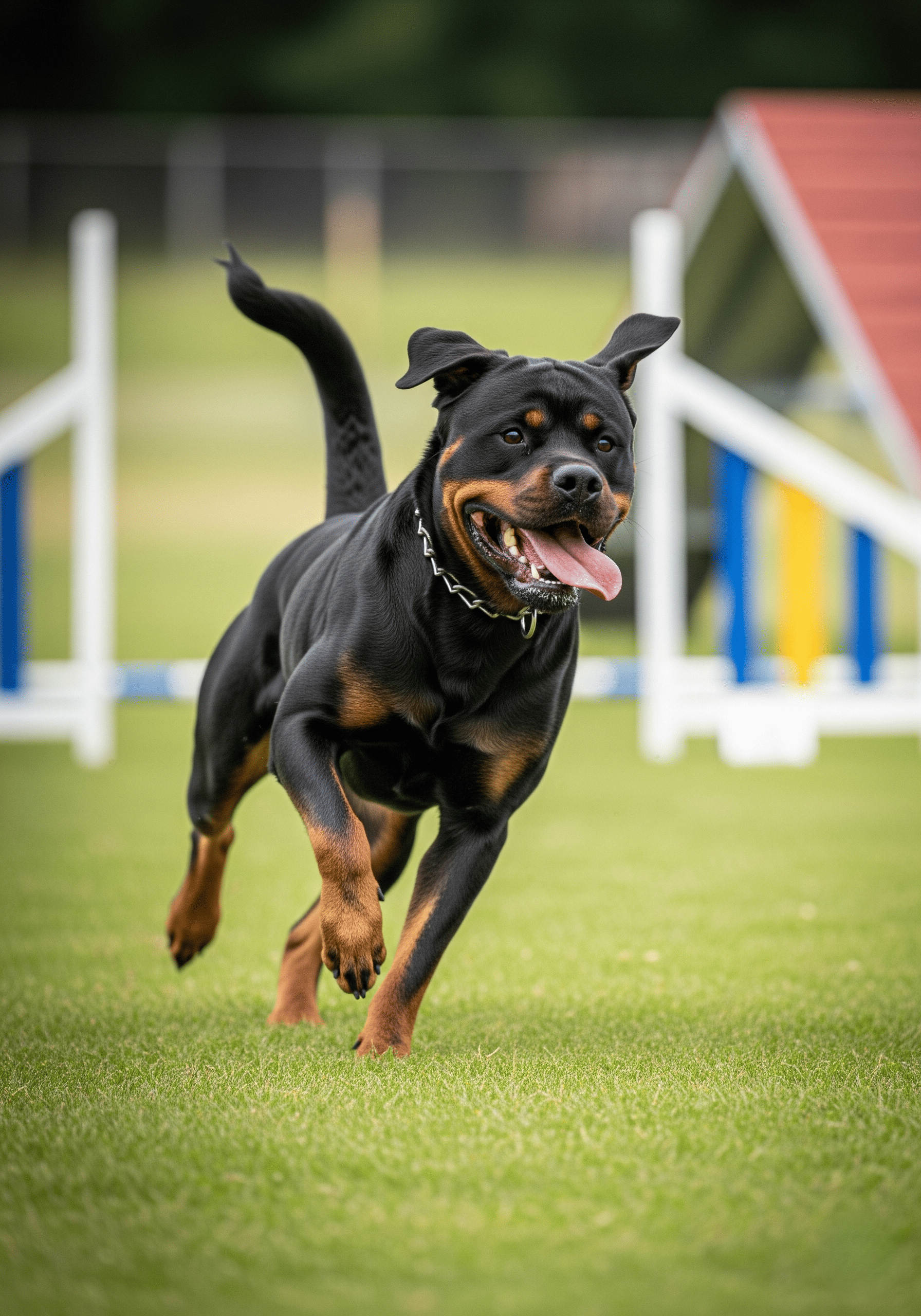
Rottweiler dog displaying typical temperament
Personality Traits of Rottweiler dog breed
CalmConfidentCourageousLoyalDevotedIntelligentPlayfulEager to pleaseGood-naturedProtective
Nature
Rottweilers are calm, confident, courageous, and deeply loyal dogs. They are self-assured and fearless but possess a good-natured and placid basic temperament.
Affectionate
Rottweilers are profoundly affectionate with their families, often called 'Velcro dogs' due to their desire for close proximity.
With Children
Known for gentle and patient demeanor with children they are raised with. Due to their size, supervision is crucial as they can accidentally knock over small children.
With Other Dogs
Rottweilers can coexist with other dogs. However, males may display dominance/aggression towards same-sex or unfamiliar dogs. Caution with small non-dog pets due to prey drive.
With Strangers
Rottweilers are typically reserved and aloof, requiring time to warm up. This cautiousness stems from their guarding history.
Protective
Rottweilers possess a strong natural urge to guard territory and loved ones, making them excellent watchdogs. They are vigilant and will alert to unusual activities.
Adaptability
Rottweilers can adapt to various living situations, including apartments, provided they receive sufficient daily exercise and mental stimulation.
Rottweilers are good with:
FamiliesChildren (with vigilant supervision)
Rottweiler Dog Breed Care & Grooming Needs
Shedding Level of Rottweiler
Moderate
Rottweilers have a double coat and shed moderately year-round, with heavier shedding in spring and fall. Weekly brushing, increasing to 2-3 times a week during shedding seasons, is recommended.
Grooming Needs of Rottweiler
Low
Their short coat requires minimal grooming. Regular brushing, nail trims, ear cleaning, and dental care are essential for the Rottie.
Grooming Tips
Brush weekly to remove loose hair. Bathe as needed (every 6-8 weeks). Trim nails every 2-3 weeks. Clean ears weekly to prevent infections, especially due to their floppy nature. Brush teeth 2-3 times a week.
Drooling Frequency of Rottweiler
Moderate
Some Rottweilers, particularly larger males with looser flews (lips), may have a tendency to drool.
Rottweilers Daily Exercise Requirements
Minimum Daily Activity of Rottweiler
1-2+ hours per day
Rottweilers need at least 1-2 hours of daily exercise, combining physical activities (walks, jogs, fetch) with mental stimulation (training, puzzle toys). Avoid high-impact activities for young Rottweilers to protect joints.
Recommended Activities for Rottweilers
Long WalksJogging (once mature)HikingFetch/Tug-of-War (controlled)SwimmingObedience/Agility TrainingPuzzle Toys
Living Space Compatibility of Rottweilers
Yard Requirement
Recommended (Securely Fenced)
A securely fenced yard is beneficial for exercise and managing their protective nature. Rottweilers are homebodies and thrive indoors with their family.
Apartment Living: Not Ideal
Rottweilers can adapt to apartment living if they receive substantial daily exercise and mental engagement, but a home with a yard is often better for this large rottweiler dog.
Living Considerations for Rottweilers
- Requires early and continuous socialization and training.
- Needs significant mental stimulation to prevent boredom and destructive behaviors.
- Sensitive to extreme temperatures (both hot and cold).
- Not recommended for first-time owners due to size, strength, and strong will.
- Potential for separation anxiety if left alone for long periods.
Rottweiler Dog Lifespan and Health Issues
Average Lifespan of Rottweilers
8-10years
Common Health Issues of Rottweilers
Hip Dysplasia
A common genetic condition in large breeds like Rottweilers where the hip joint doesn't develop correctly, leading to pain and arthritis. The Rottweiler age span can be affected by this.
Elbow Dysplasia
Malformation of the elbow joint, causing pain and lameness.
Osteochondritis Dissecans (OCD)
Painful joint problem where cartilage fails to develop properly.
Cruciate Ligament Ruptures
Common knee injury causing pain and instability, often requiring surgery.
Subaortic Stenosis (SAS)
Congenital heart disease involving narrowing of the aorta.
Dilated Cardiomyopathy
Heart condition reducing its ability to pump blood effectively.
Osteosarcoma
Aggressive bone cancer frequently diagnosed in Rottweilers.
Hemangiosarcoma
Cancer of the blood vessels, often affecting spleen, liver, or heart.
Gastric Dilatation-Volvulus (GDV) / Bloat
Life-threatening condition where the stomach twists; common in deep-chested breeds.
Eye Conditions (Entropion, Ectropion, PRA, Cataracts)
Various inherited eye problems can affect Rottweilers.
Juvenile Laryngeal Paralysis & Polyneuropathy (JLPP)
Serious hereditary neurological disease in puppies.
Obesity
Prone to weight gain, which exacerbates joint and heart issues.
Parvovirus
Rottweilers show higher susceptibility to parvovirus.
Preventative Care of Rottweilers
- Choose reputable breeders who screen for genetic conditions (OFA/CHIC evaluations for hips, elbows, eyes, heart, JLPP).
- Maintain a healthy weight through proper diet and exercise.
- Regular veterinary check-ups for early detection and vaccinations.
- Provide age-appropriate exercise, avoiding overexertion in puppies.
- Proactive health management is key to a good lifespan of Rottweiler dogs.
- Educate yourself on signs of common health problems in Rottweilers.
What to feed Rottweiler? Rottweiler's diet and Nutrition
Recommended Diet for Rottweiler dog breed
High-quality, protein-rich commercial dog food appropriate for their age (puppy, adult, senior) and activity level. Protein sources like chicken, fish, or beef should be primary. Avoid low-value fillers.
Typical Feeding Schedule of Rottweilers
| Age Group | Feeding Frequency |
|---|---|
| Puppies (under 6 months) | 3-4 meals/day |
| Adolescents (6-18 months) | 2-3 meals/day |
| Adults | 2 meals/day |
| Seniors | 2 smaller meals/day, potentially adjusted formula |
Sensitivities & Considerations of Rottweilers
Potential Food Sensitivities of Rottweilers
Some Rottweilers can have sensitive stomachs. A low-carb diet with nutritious complex carbohydrates (e.g., brown rice, sweet potatoes) may be beneficial.
Dietary Considerations of Rottweilers
- Large breed puppy formulas are crucial for managing growth.
- Monitor weight to prevent obesity; treats should be <10% of daily calories.
- To prevent bloat: feed multiple smaller meals, avoid exercise around meals, consider slow-feeders.
- Ensure constant access to fresh water.
- Veterinarian may recommend supplements (Omega fatty acids, glucosamine/chondroitin).
Weight Management of Rottweilers
Crucial due to proneness to obesity. Measured, scheduled feedings are important. Regular weight monitoring is advised for this dog rottweiler dog.
Signs of Healthy Weight of Rottweilers
- Ribs are palpable with a slight fat covering.
- Visible waistline when viewed from above.
- Abdomen is tucked up when viewed from the side.
Tips for Healthy Feeding of Rottweilers
- Measure food accurately and adjust based on activity and body condition.
- Feed age-appropriate formulas for Rottweilers.
- Avoid free-feeding.
- Consult your veterinarian for personalized diet advice.
Is a Rottweiler a good match for you?
Rottweilers are not recommended for first-time owners due to their size, strength, intensity, and strong-willed nature. They require experienced, firm, patient, and knowledgeable leadership to ensure they develop into well-behaved companions. A commitment to training and socialization is essential when deciding to breed Rottweilers or own one.
Rottweilers are a Great Match For
- Experienced dog owners, particularly of large/working breeds.
- Individuals or families prepared for consistent training and socialization.
- Active owners who can provide sufficient physical and mental exercise.
- Those seeking a loyal, confident, and protective companion.
- People who understand and respect the breed's strength and intelligence.
Rottweilers May be Challenging For
- First-time or novice dog owners.
- Timid or inconsistent individuals.
- Owners unable to provide ample daily exercise and mental stimulation.
- Those looking for a dog that requires minimal training or socialization.
- People unprepared for the responsibility of managing a large, powerful dog.
- Households with very young children if supervision cannot be constant.