Sniffing...

France
Brittany Spaniel
Sporting GroupGundogEnergeticAffectionateIntelligentMedium Sized12-14 years
The Brittany, a vivacious and intelligent breed hailing from the Brittany region of France, is a celebrated versatile gundog. Renowned for its keen hunting instincts, boundless energy, and affectionate nature, the Brittany excels both in the field and as a devoted family companion. This profile explores the breed's rich history, distinctive appearance, lively temperament, and specific care needs, offering a comprehensive guide for those captivated by this athletic and amiable dog.
Important Disclaimer:The information provided on this page about the Brittany Spaniel is intended for general knowledge and informational purposes only and does not constitute professional veterinary advice. Always consult with a qualified veterinarian for any health concerns or medical conditions related to your dog. The breed identification provided by our AI tool is a prediction and should not be considered a definitive diagnosis.
Brittany Dog Breed Overview
- Breed Group
- Sporting
- Origin
- France (Brittany region)
- Purpose
- Pointing, Retrieving, Versatile Gundog
- Size
- Medium
- Other Names
- Brittany Spaniel, Epagneul Breton
- Lifespan
- 12-14 years
- Temperament
- FriendlyAffectionateEager to pleaseIntelligentAdaptableEnergeticAlertHappyTrainableGood-natured
- Activity Level
- High
- Trainability
- High (Intelligent and eager to please)
- Grooming
- Low to Moderate (Weekly brushing)
- Shedding
- Moderate (Seasonal shedding)
- Barking
- Moderate (Can be alert barkers, but not typically excessive)
- Good with
- Health Issues
- Hip DysplasiaElbow DysplasiaEpilepsyHypothyroidismEye Conditions (Cataracts, PRA)Patellar LuxationEar Infections
- Suited For
- Active individuals and families
- Hunters and outdoor enthusiasts
- Homes with a securely fenced yard
- Owners committed to consistent training and high exercise needs
- Those seeking an intelligent and responsive companion
- Families, Children, Other dogs (with socialization)
Brittany History & Origin: Popularity of Brittanys
The Brittany, a vivacious and intelligent breed hailing from the Brittany region of France, is a celebrated versatile gundog. Renowned for its keen hunting instincts, boundless energy, and affectionate nature, the Brittany excels both in the field and as a devoted family companion. This profile explores the breed's rich history, distinctive appearance, lively temperament, and specific care needs, offering a comprehensive guide for those captivated by this athletic and amiable dog.

Brittany Spaniel's cute puppy 🌻
History of Brittany
The Brittany hails from the Brittany province in northwestern France, with depictions of similar dogs dating back to the 17th century. The modern breed is believed to have developed in the mid-1800s from crosses between local French spaniels/gundogs and English Pointers and Setters brought by British hunters.
The first written records appeared around 1850. The breed was officially recognized in France in 1907, and the first breed standard was established. Brittanys were first imported to the USA in 1928 and recognized by the AKC in 1934. In 1982, the AKC officially dropped 'Spaniel' from the name in the U.S.
Purpose and Popularity of Brittany
Originally bred as a versatile gundog, the Brittany excels at pointing and retrieving game in various terrains. They are prized for their keen nose, agility, and trainability.
Brittanys are popular as both hunting companions and family pets due to their affectionate nature and manageable size. They are known for being the breed with the most dual champions (excelling in both conformation shows and field trials) in AKC history.
Did you know?
Despite often being called a 'Brittany Spaniel,' in the United States, the official AKC breed name is simply 'Brittany.' They are considered pointers, not flushing spaniels.
Brittany Dog Breed Size and Physical Traits
Size of Brittany dog Breeds
Size Category
Medium
Height
Male
17.5-20.5 inches (44-52 cm)
Female
17.5-20.5 inches (44-52 cm)
Weight
Male
30-45 lbs (14-20 kg)
Female
30-45 lbs (14-20 kg)
Appearance of Brittany dog Breeds
- Coat Type
- Brittany Spaniel's coat is dense, flat or wavy, never curly or silky. Light feathering on ears, chest, and legs.
- Eye Size & Color
- Brittany Spaniel's eyes are expressive, intelligent. Amber, hazel, or brown, depending on coat color.
- Ear Size & Shape
- Brittany Spaniel's ears are set high, triangular, relatively short, lying flat and close to the head, with some light feathering.
- Tail
- Brittany Spaniel's tail is naturally short (bobtail) or may be docked to about 3-10 cm (1-4 inches) where permitted. Undocked tails are also seen.
Description of Brittanys Appearance

👀 How does Brittany look like?
- The Brittany is a medium-sized, leggy dog built for agility and endurance. They present a compact and athletic silhouette.
- Their coat is dense, either flat or wavy, and comes in striking color combinations like orange and white or liver and white, often with roan or ticked patterns. Some standards also accept black.
- Brittanys typically stand 17.5 to 20.5 inches tall and weigh between 30 and 45 pounds. Their expressive eyes are usually amber or hazel, and their high-set, triangular ears lie flat.
- A hallmark of the breed is often a naturally short tail or one that is docked.
Coat Colors of Brittany dogs
Orange & White
Liver & White
Black & White (some standards)
Tricolor (Orange/Liver/White, Black/Orange/White)
Roan patterns are common
Distinctive Features of Brittany dog breeds
- Brittany Spaniel's compact, leggy, and athletic build, suggesting agility and stamina.
- They have expressive and intelligent eyes.
- They have high-set ears that frame the face.
- Brittany's have distinctive coat colors, often with roan or ticked patterns.
- They have naturally short or docked tail.
Brittany Environment, Barking, Trainability and More...
Barking Level of Brittany Spaniel
Moderate
Brittanys can be alert barkers, notifying their owners of new sights or sounds, but they are not typically known for excessive or nuisance barking if well-exercised and trained.
Trainability of Brittany Spaniel
High
Brittanys are highly intelligent and eager to please, making them very trainable. They respond best to positive reinforcement and gentle, consistent training methods.
Energy Level of Brittany Spaniel
High
This is a high-energy breed requiring significant daily exercise. They are enthusiastic and tireless, making them great partners for active people.
Friendly Environment Description of Brittany Spaniels
- Brittanys thrive in active homes where they receive plenty of mental and physical stimulation. They are people-oriented and do best when included in family activities.
- A securely fenced yard is essential for them to run and play safely. They are not well-suited for prolonged periods of being left alone as they can develop separation anxiety.
- Early socialization is important to develop a well-rounded and confident temperament, as some lines can be sensitive or timid.
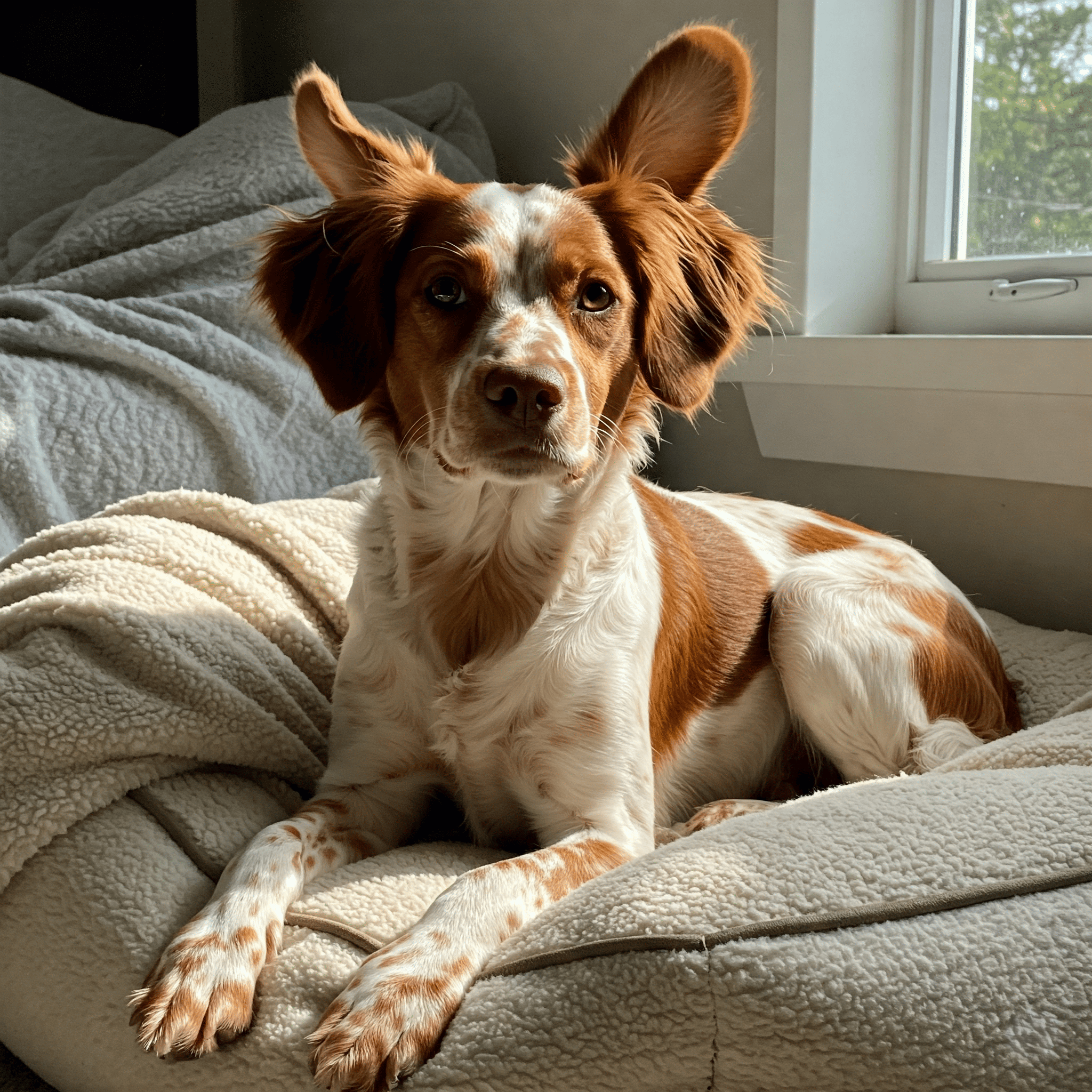
🏠 Brittany dog breed in its home environment
Personality Traits of Brittany Spaniel dog breed
AffectionateIntelligentEnergeticHappyEager to pleaseTrainableLoyalAlertGood-naturedPlayful
Nature
Known for their happy, alert, and energetic disposition. They are intelligent and generally eager to please their owners.
Affectionate
Very affectionate with their families and enjoy being close to their people. They often form strong bonds.
With Children
Generally very good with children, being playful and gentle. Supervision is recommended, especially with very young children, due to their energy.
With Other Dogs
Typically get along well with other dogs, especially if socialized from a young age. They can be quite playful.
With Strangers
Usually friendly, but some can be reserved or shy with strangers if not properly socialized. Early exposure to various people is key.
Protective
Alert and will bark to announce visitors or unusual occurrences, making them good watchdogs, but they are not typically aggressive guard dogs.
Adaptability
Adaptable to various living situations as long as their high exercise and companionship needs are met. They are not ideal for sedentary lifestyles.
Brittany Spaniels are good with:
FamiliesChildrenOther dogs (with socialization)Active Singles
Brittany Dog Breed Care & Grooming Needs
Shedding Level of Brittany Spaniel
Moderate
Brittanys have a single coat and shed moderately year-round, with potentially heavier shedding seasonally. Regular brushing helps manage loose hair.
Grooming Needs of Brittany Spaniel
Low to Moderate
Their coat is relatively low-maintenance. Weekly brushing is usually sufficient. Occasional baths as needed.
Grooming Tips
Brush weekly with a bristle brush or grooming mitt to remove dead hair and distribute skin oils. Pay attention to feathering on ears, chest, and legs, which might need occasional trimming to prevent matting, especially if active outdoors. Check and clean ears regularly to prevent infections. Trim nails as needed and maintain dental hygiene.
Drooling Frequency of Brittany Spaniel
Low
Brittanys are generally not known for excessive drooling.
Brittany Spaniels Daily Exercise Requirements
Minimum Daily Activity of Brittany Spaniel
1.5 - 2 hours per day (or more)
Brittanys are a very active breed requiring vigorous daily exercise. This should include activities beyond just a walk, such as running, hiking, or playing fetch in a secure area. Insufficient exercise can lead to hyperactivity and behavioral issues.
Recommended Activities for Brittany Spaniels
Running/JoggingHikingFetch and other retrieving gamesAgilityFlyballField Trials/HuntingCanicrossSwimming (many enjoy water)
Living Space Compatibility of Brittany Spaniels
Yard Requirement
Securely Fenced Yard Highly Recommended
A securely fenced yard is crucial for Brittanys to safely burn off energy. Their hunting instincts may lead them to roam or chase if not contained.
Apartment Living: Not Ideal
Generally not recommended for apartment living unless the owner is extremely dedicated to providing extensive daily outdoor exercise and mental stimulation. They thrive with space.
Living Considerations for Brittany Spaniels
- Requires significant daily exercise and mental engagement.
- Needs early and consistent positive reinforcement training.
- Benefits greatly from ongoing socialization.
- Can suffer from separation anxiety if left alone for too long.
- Strong prey drive; may chase small animals if not trained.
Brittany Dog Lifespan and Health Issues
Average Lifespan of Brittany Spaniels
12-14years
Common Health Issues of Brittany Spaniels
Hip Dysplasia
An abnormal formation of the hip socket, common in many breeds.
Elbow Dysplasia
An abnormal formation of the elbow joint.
Epilepsy
A neurological condition causing seizures. Often manageable with medication.
Hypothyroidism
An underactive thyroid gland, which can affect metabolism.
Eye Conditions (e.g., Cataracts, Progressive Retinal Atrophy - PRA)
Various inherited eye diseases that can affect vision.
Patellar Luxation
Dislocation of the kneecap.
Ear Infections
Due to their floppy ears, moisture and debris can get trapped, leading to infections. Regular cleaning is important.
Dental Disease
Common in dogs; regular dental care is important.
Preventative Care of Brittany Spaniels
- Choose reputable breeders who screen their breeding stock for genetic health conditions.
- Provide a balanced diet and maintain a healthy weight to prevent stress on joints.
- Ensure regular, vigorous exercise suitable for their age and health.
- Schedule regular veterinary check-ups, vaccinations, and parasite control.
- Perform routine ear cleaning and dental care.
- Early socialization and training contribute to overall well-being.
What to feed Brittany? Brittany's diet and Nutrition
Recommended Diet for Brittany Spaniel dog breed
High-quality commercial dog food formulated for active, medium-sized breeds, appropriate for their age (puppy, adult, senior) and high activity level. Consult with a vet for specific recommendations.
Typical Feeding Schedule of Brittany Spaniels
| Age Group | Feeding Frequency |
|---|---|
| Puppies (under 6 months) | 3-4 meals/day |
| Adolescents (6-12 months) | 2-3 meals/day |
| Adults | 2 meals/day |
| Seniors | 2 smaller meals/day, potentially adjusting formula for senior needs and reduced activity. |
Sensitivities & Considerations of Brittany Spaniels
Potential Food Sensitivities of Brittany Spaniels
Generally a hardy breed, but individual dogs can develop allergies or sensitivities to certain ingredients. Monitor for signs of digestive upset or skin issues and consult a vet if concerned.
Dietary Considerations of Brittany Spaniels
- Active Brittanys have higher caloric needs than less active dogs; adjust food intake accordingly.
- Monitor weight to ensure they maintain a lean, athletic condition and avoid obesity.
- Ensure constant access to fresh, clean water, especially during and after exercise.
- Consider puppy food specifically for medium breeds to ensure proper growth.
Weight Management of Brittany Spaniels
Maintaining a lean, fit body condition is crucial for their agility, joint health, and overall longevity, especially given their active nature.
Signs of Healthy Weight of Brittany Spaniels
- Ribs are easily palpable with a slight fat covering.
- A visible waistline when viewed from above.
- Abdomen is tucked up when viewed from the side.
- Good energy levels and stamina.
Tips for Healthy Feeding of Brittany Spaniels
- Measure food accurately to avoid overfeeding.
- Adjust portions based on age, activity level, metabolism, and body condition.
- Use treats sparingly, especially during training.
- Avoid strenuous exercise immediately before or after meals.
- Consult your veterinarian for personalized diet advice based on your dog's specific needs.
Is Brittany a good match for you?
Brittanys are best suited for active individuals or families who can provide ample exercise, mental stimulation, and companionship. They thrive with owners who enjoy outdoor activities and are committed to positive training.
Brittanys are a Great Match For
- Active individuals, couples, or families with children.
- Hunters, hikers, runners, and outdoor enthusiasts.
- Owners who can provide at least 1.5-2 hours of vigorous exercise daily.
- People looking for an intelligent, trainable, and responsive canine partner.
- Households with a securely fenced yard.
- Those who appreciate an affectionate and involved family member.
Brittanys May be Challenging For
- Sedentary individuals or families.
- First-time dog owners who are not prepared for high energy levels and training needs.
- People living in small apartments without significant commitment to outdoor exercise.
- Owners who are away from home for very long periods.
- Those who prefer a very independent or low-energy dog.
- Individuals unwilling to engage in consistent training and socialization.